
Moscow on pointe
Moscow is the place where the history of Russian ballet was born in the 17th century. Here, in streets and squares, in theaters and museums, memories of outstanding dancers and talented ballet masters are kept. In this block we will tell you more about the places associated with those whose names are closely connected with the world of the most graceful art.
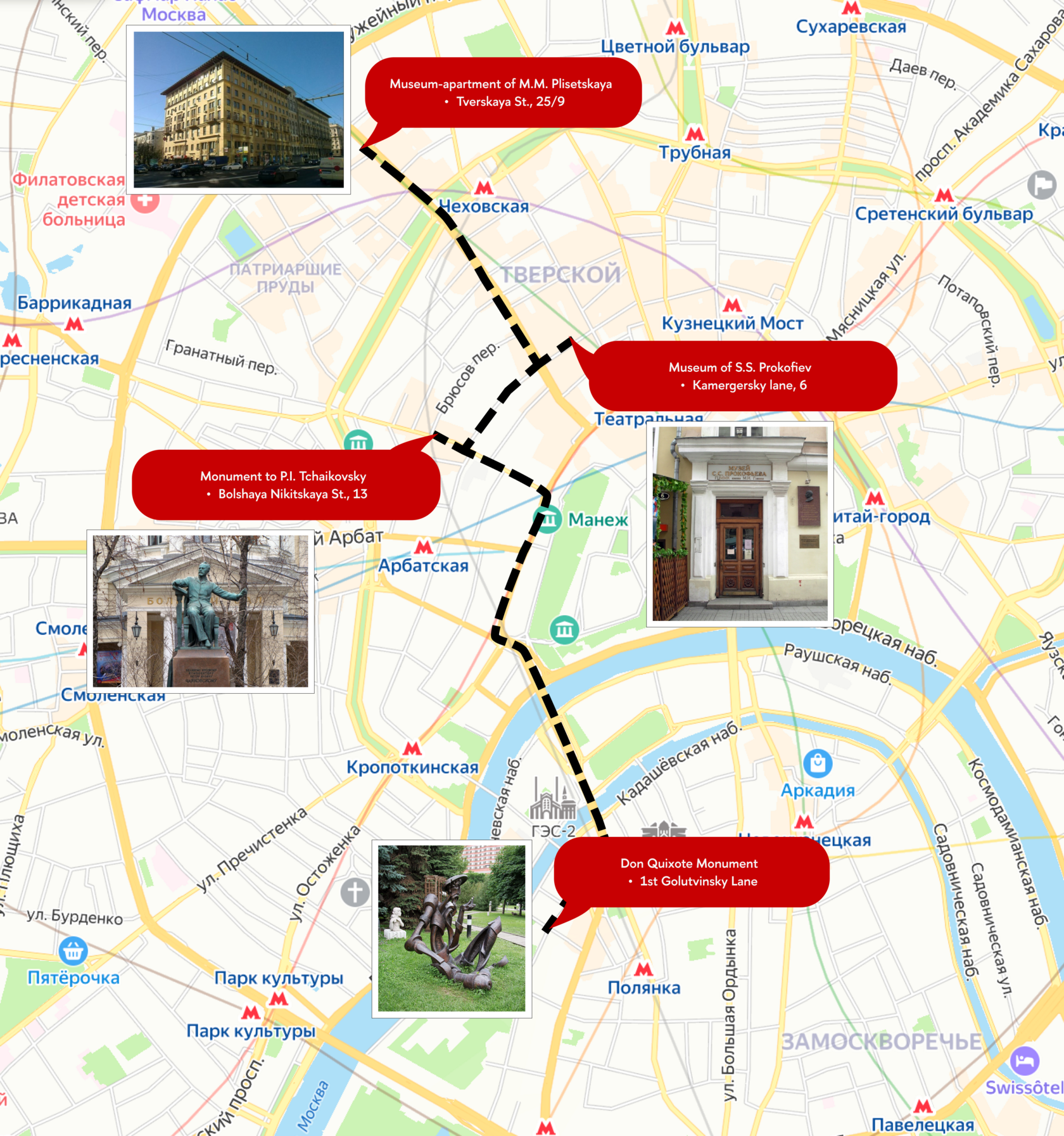
Museum-apartment of M.M. Plisetskaya
Adress: Tverskaya St., 25/9
Adress: Tverskaya St., 25/9
First riddle

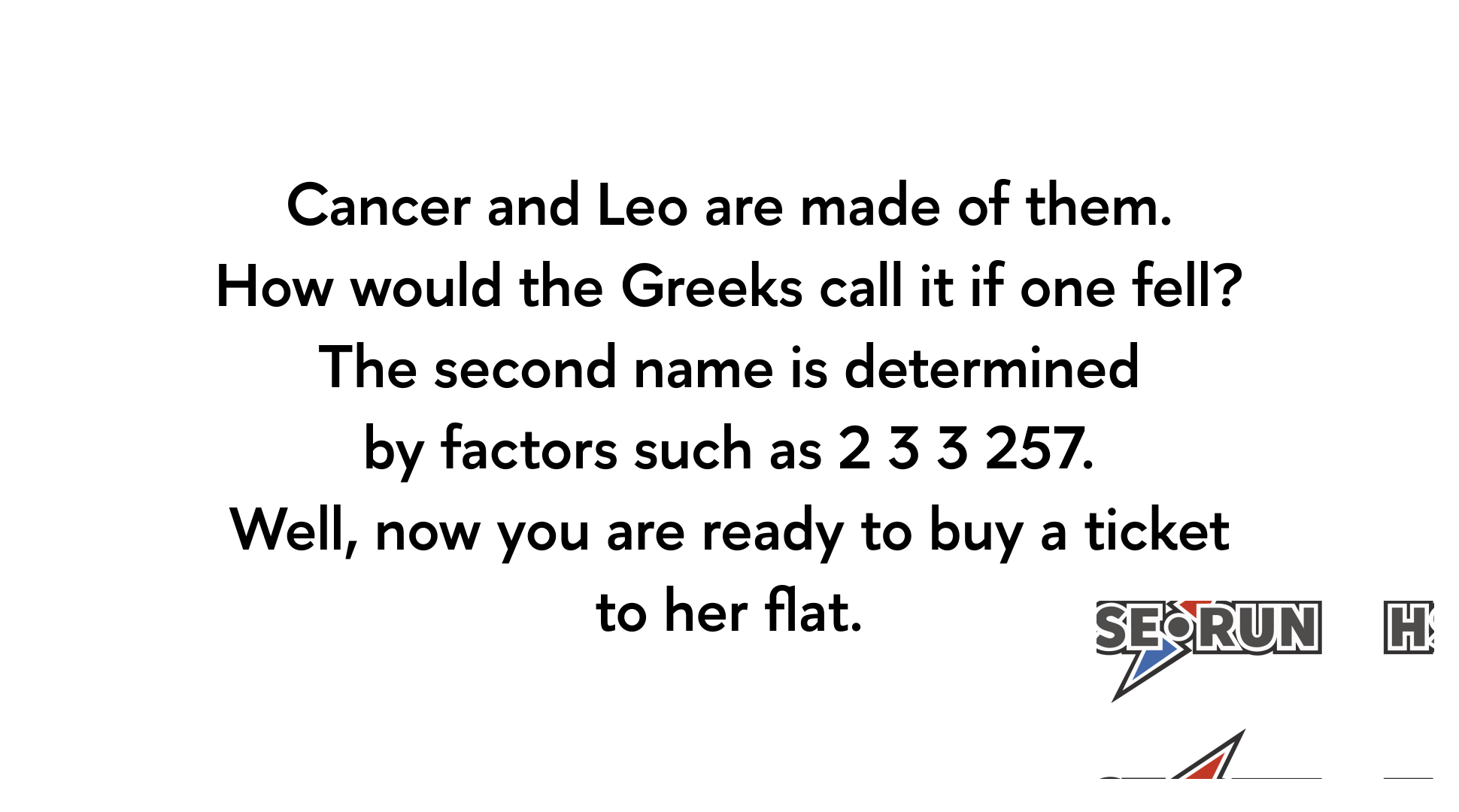
Walking along Tverskaya Street, among office buildings and stores, one can notice
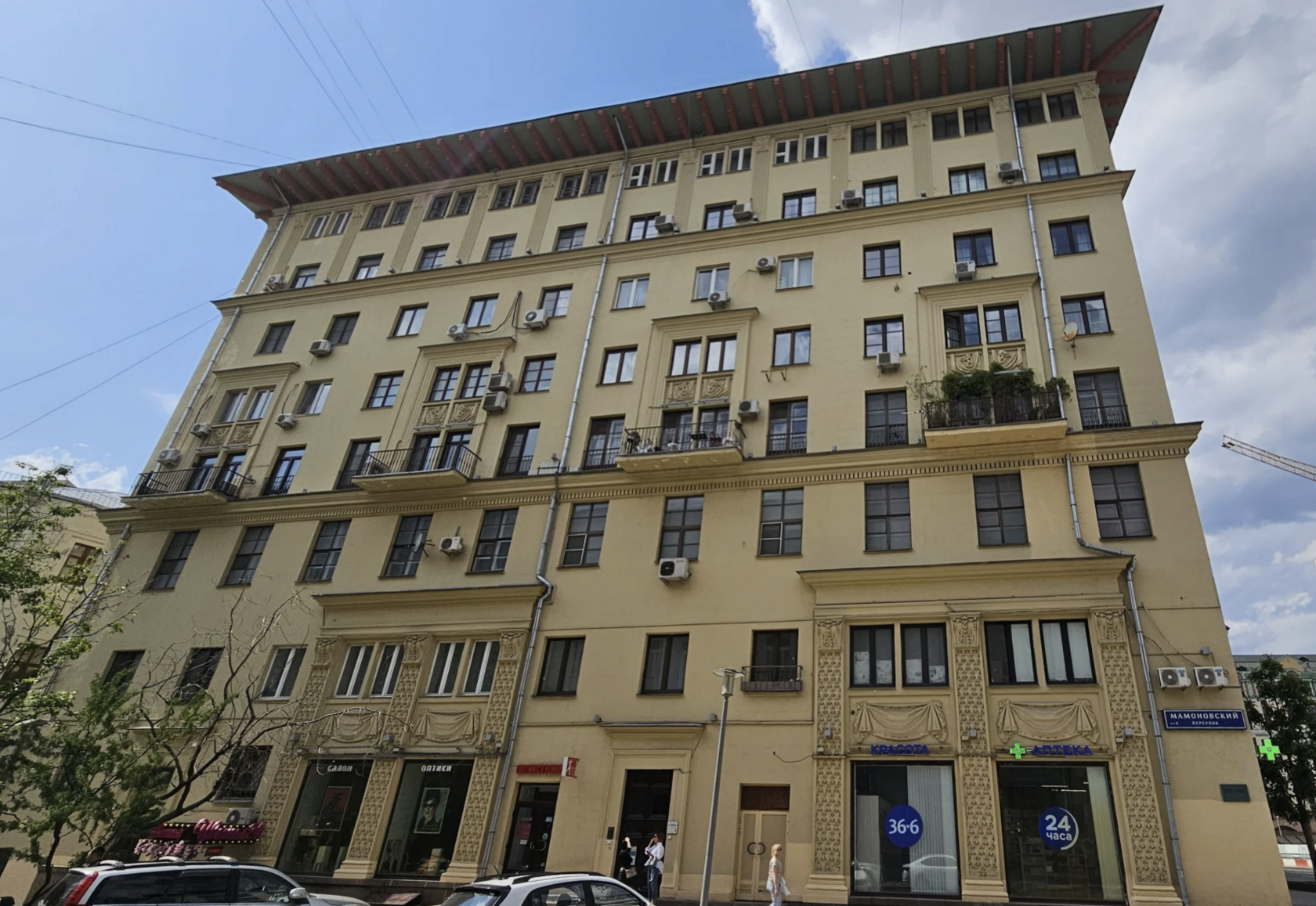
a building with a bright yellow facade. This is the house where one of the main ballerinas of the 20th century, Maya Plisetskaya, and her husband, Rodion Shchedrin, lived for more than 30 years of the last century.
The star couple moved into the apartment in 1963 and lived here practically until the end of the last century. It was here that Rodion Shchedrin composed his famous ballets and operas, such as “Carmen Suite” and “Lady with a Dog”.
This apartment was also the home of many cultural figures of the Soviet Union: the poet and publicist Andrei Voznesensky, the musician Mstislav Rastropovich, and the no less famous Lilya Brik, in whose house Plisetskaya and Shchedrin met.
In February 2022, the apartment became a memorial museum, but its halls are still filled with warmth and creative atmosphere, and a visit to it leaves the feeling of a visit. Rodion Shchedrin himself asked for this when he donated the apartment to the Bakhrushinsky Museum. And so it turned out to be: the staff of the institution left everything as it was, supplementing everyday things with exhibits worth their weight in gold. The cabinet that greets visitors at the entrance has not changed in appearance for half a century, but inside it valuable details and the ballerina's shoes are kept: from children's shoes to pointe shoes in which Plisetskaya performed the part of the “dying swan”.

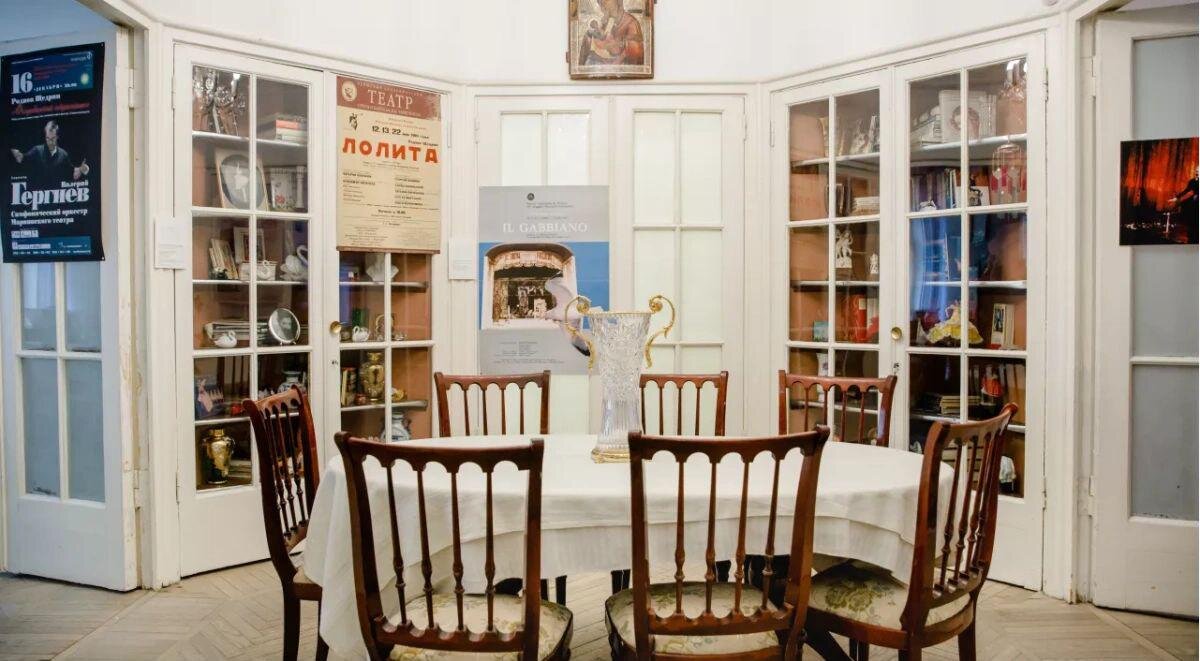
Each of the rooms of the museum has its own history. There are 5 of them in the museum: the kitchen, the hall, the bedroom, Rodion Shchedrin's study and the dressing room. The last one is a real treasure trove of treasures. Here you can see recognizable dresses by Pierre Cardin, including the one in dark green gas with lilac flowers, given to Maya for the premiere of “Anna Karenina”. When looking for exhibits for the dressing room, a suitcase was found, at the bottom of which were two lithographs by Marc Chagall with the gift signature “For Mayichka”. Each of the rooms of the apartment contains samples of that era, right down to the bottle of perfume that Maya Mikhailovna used all her life.
Monument to P.I. Tchaikovsky
Adress: Bolshaya Nikitskaya St., 13
Adress: Bolshaya Nikitskaya St., 13
Second riddle


Pyotr Ilyich Tchaikovsky, the great composer who wrote more than 80 works, performed the overture to the opera Ruslan and Lyudmila by Mikhail Glinka at the opening of the Moscow Conservatory, and on the same day held the first classes for students.
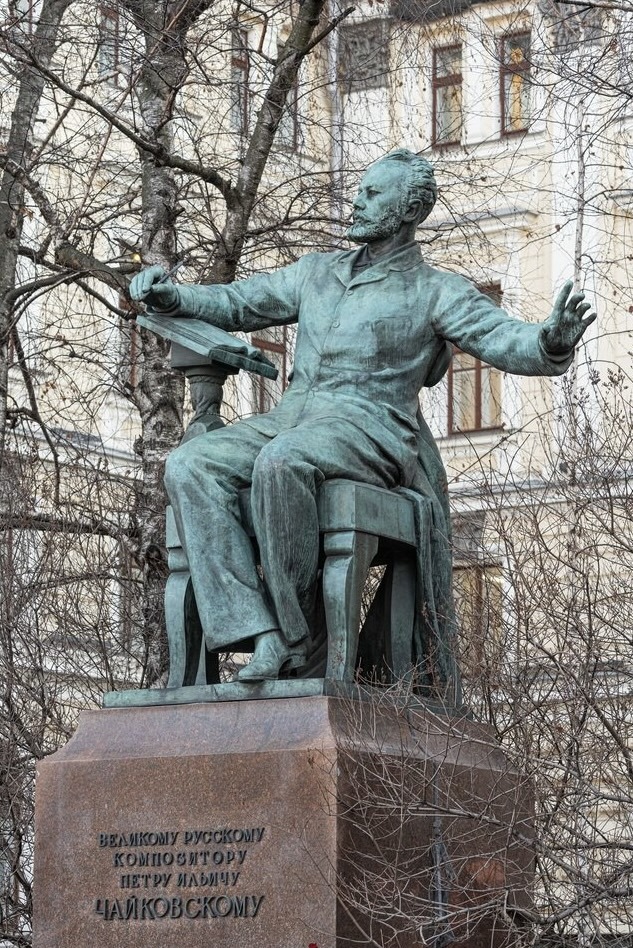
One of the most famous buildings located on Malaya Nikitskaya Street is the Moscow Conservatory. The history of the institution founded by Nikolai Grigorievich Rubinstein in 1866 includes many talented graduates and teachers, but the figure of only one of them stands in the square in front of the school.
Now in the cozy courtyard of the Conservatory, where students used to rest between pairs, there is a monument by Vera Mukhina. The majestic sculpture reflects the composer at the moment of creating a new ballet or opera - Pyotr Ilyich is counting out the rhythm of a musical phrase with his left hand and preparing to write it down with his right.
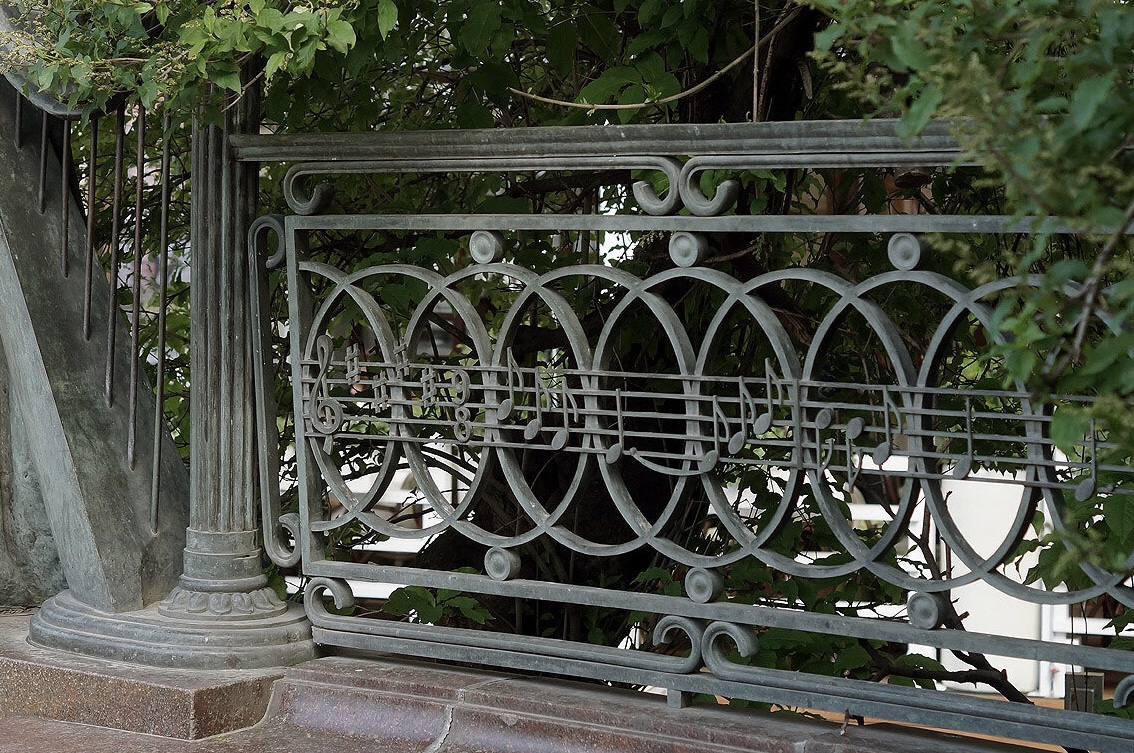
Not only the monument itself is of interest, but also the wrought iron fence that surrounds the semicircular marble bench.
If you look closely at it, you will notice a sheet music stand with excerpts from Tchaikovsky's compositions:
the ballet Swan Lake, the opera Eugene Onegin, the Pathetique Symphony and more.
The lattice of the monument also contains some amazing details that are easy to miss during a simple walk in the neighborhood of the Conservatory. An ornate hedge here displays the initials and years of life of Pyotr Ilyich Tchaikovsky (1840 - 1893).
If you look closely at it, you will notice a sheet music stand with excerpts from Tchaikovsky's compositions:
the ballet Swan Lake, the opera Eugene Onegin, the Pathetique Symphony and more.
The lattice of the monument also contains some amazing details that are easy to miss during a simple walk in the neighborhood of the Conservatory. An ornate hedge here displays the initials and years of life of Pyotr Ilyich Tchaikovsky (1840 - 1893).




Museum of S.S. Prokofiev
Adress: Kamergersky lane, 6
Adress: Kamergersky lane, 6
Third riddle
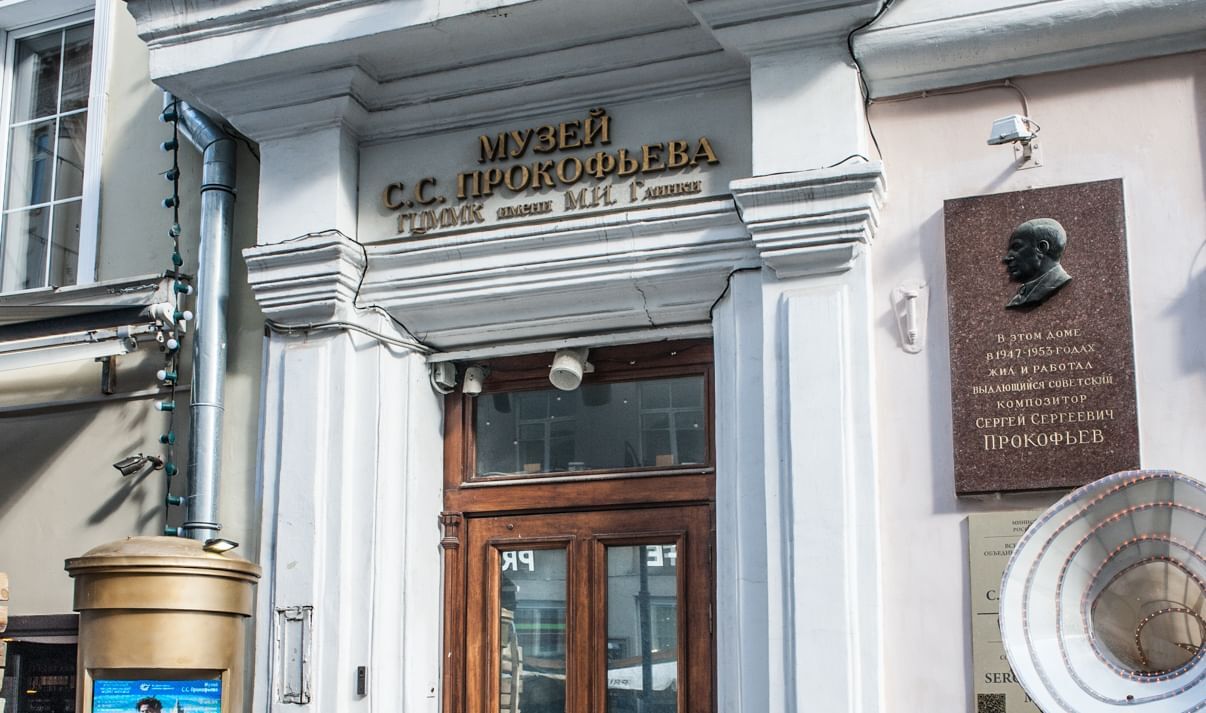
Kamergersky pereulok, 6, is the address of one of the houses where Sergei Sergeyevich Prokofiev lived and composed. The composer spent more than six years in the apartment, which became a museum, and composed his last works: The Tale of the Seventh Flower and the Seventh Symphony.
From 1947 to 1953, Prokofiev's talented friends and colleagues visited the apartment many times: cellist Mstislav Rostropovich, pianist Svyatoslav Richter and many others. Now the doors of the conductor's apartment are open to all comers - in 2008 it became a part of the Russian National Museum of Music.
From 1947 to 1953, Prokofiev's talented friends and colleagues visited the apartment many times: cellist Mstislav Rostropovich, pianist Svyatoslav Richter and many others. Now the doors of the conductor's apartment are open to all comers - in 2008 it became a part of the Russian National Museum of Music.
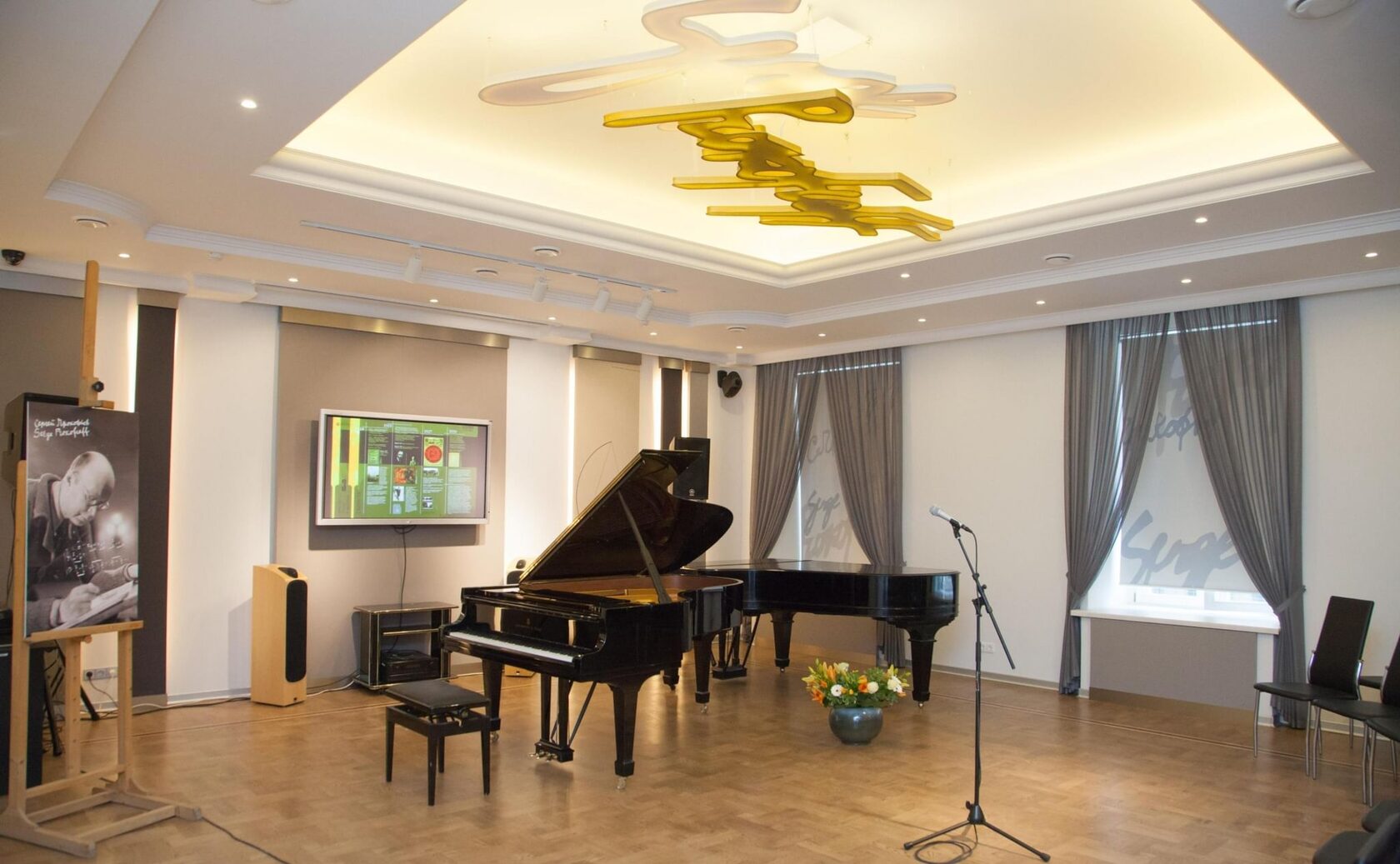
The opening, however, took place only 40 years after the idea of creating a memorial corner in the very center of the capital. The apartment where Prokofiev spent the last years of his life belonged to the parents of Mira Mendelssohn-Prokofieva. It was thanks to the composer's second wife that the museum collection received personal belongings, and her memoirs were used to reconstruct important parts of the pianist's biography.
Each of the rooms of the apartment, which act as halls, is decorated in a unique architectural style: from classicism to contructivism. This decision was made by the museum staff to reflect the variety of musical trends and styles in which Prokofiev worked.




One of the most striking details of the interior, which is hard to pass by, is the parquet stylized as a chessboard. This game is one of Prokofiev's main hobbies, to which he devoted his free time from music. That is why, walking around the apartment, one can see not only notebooks, but also tournament tables and statuettes in the form of chess pieces in cupboards and bookshelves.
The artist's living room is the holy of holies of the apartment. Here stands the grand piano on which Prokofiev composed masterpieces. The perimeter of the room is lined with sketches for costumes and scenery written by Vadim Ryndin, Valery Leventhal and Isaak Rabinovich.
The artist's living room is the holy of holies of the apartment. Here stands the grand piano on which Prokofiev composed masterpieces. The perimeter of the room is lined with sketches for costumes and scenery written by Vadim Ryndin, Valery Leventhal and Isaak Rabinovich.
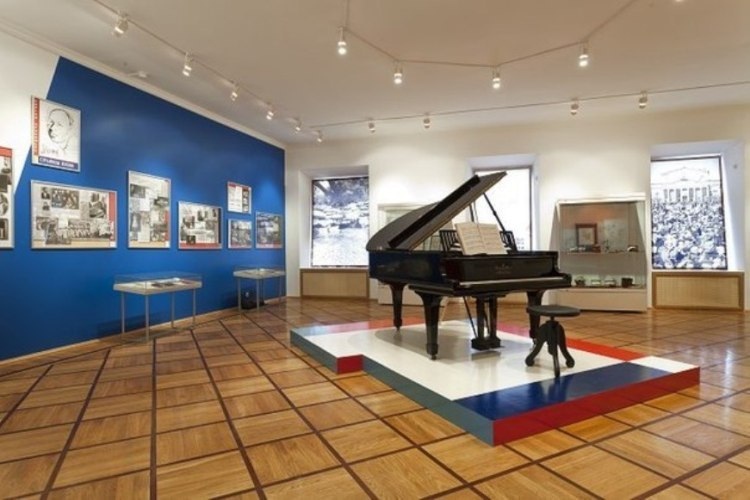
Leaving the living room, you can head towards the composer's study. Everything in it looks as if Sergei Sergeyevich had just stepped out of it a couple of minutes ago to take a break from his hard work. A table covered with notes and drafts, as well as a typewriter and a chessboard create a feeling of “the presence of the master”. The study leads to the library, decorated in the style of the 1930s-50s. It is filled with books from the libraries of the composer and his friends. Portraits of prominent musicians and artists with whom Prokofiev
was acquainted hang on the walls.
was acquainted hang on the walls.


Don Quixote Monument
Адрес: 1st Golutvinsky Lane
Адрес: 1st Golutvinsky Lane
Fourth riddle
“Donkikhotstvo" is not a disease, publicists wrote centuries ago, but a way of thinking possessed by those who strive for justice and truth. To stage a ballet with a protagonist possessing just such qualities was a risky task. The risk of failing to meet the expectations of fans of the novel was high, and an error of interpretation could call into question the ballet master's work. That said, the works of Alexander Gorsky, Vladimir Vasiliev and Boris Eifman filled the world of Russian art with a new breath and popularized the famous story in the country.


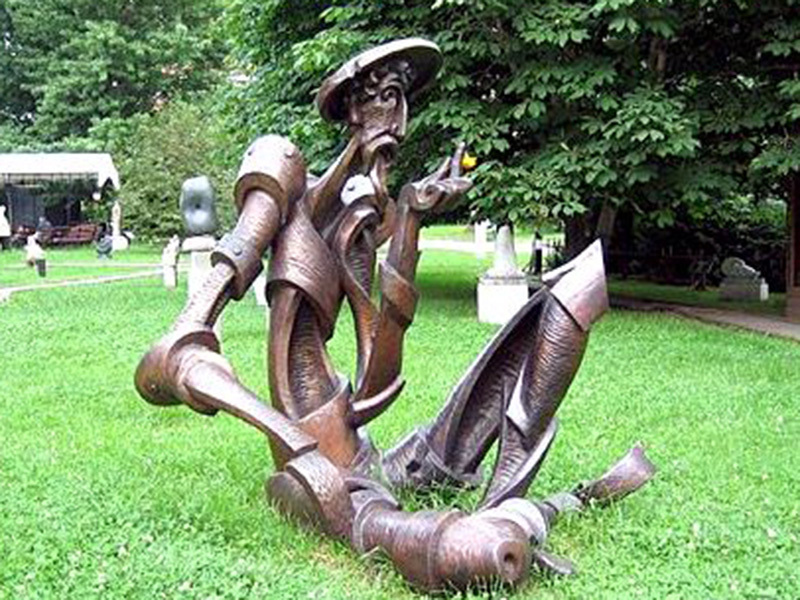

It is said that the whole of world literature is built on just two characters. A monument to one of them, Don Quixote of La Mancha, can be seen in Museon Park, in the 1st Golutvinsky Lane.
This character of Miguel Cervantes is the personification of aspiration to dreams and loyalty to ideals. For the monument of Don Quixote, known for his thoughtfulness, it was difficult to find a more suitable place than the alley of the Museon Park. However, millions are familiar with this character not only because of the novel published in the XVII century, but also because of the ballet staged on the stage of the Bolshoi Theater in 1869 by the outstanding Marius Petipa.
This character of Miguel Cervantes is the personification of aspiration to dreams and loyalty to ideals. For the monument of Don Quixote, known for his thoughtfulness, it was difficult to find a more suitable place than the alley of the Museon Park. However, millions are familiar with this character not only because of the novel published in the XVII century, but also because of the ballet staged on the stage of the Bolshoi Theater in 1869 by the outstanding Marius Petipa.
Nowadays the name of Don Quixote touches every sphere of art, but during a walk around Museon it is easy not to recognize the character.
The genre sculpture by Nikolay Silis is not like classical monuments to the heroes of literature. Created under the influence of formalism, it reflects the philosophical nature
of the creative path.
The genre sculpture by Nikolay Silis is not like classical monuments to the heroes of literature. Created under the influence of formalism, it reflects the philosophical nature
of the creative path.

Interestingly, Silis himself repeatedly compared himself to Don Quixote. The sculptor identified his life with the struggle with windmills and all his life praised female beauty. And despite the fact that his hand belongs to several hundred works, each of them traces the ideal of Silis, to which the sculptor remained faithful as Don Quixote to Dulcinea.
