Maecenas' Moscow
They say that art is not only about what is in museums, but also about what is in each of us. It is not only about paintings and sculptures, but also about attitude to life. But there are those who have managed to combine both arts: to be generous and to be able to delight and create. In this block we will talk about the places in the capital associated with famous patrons of the arts whose collections inspire to this day.
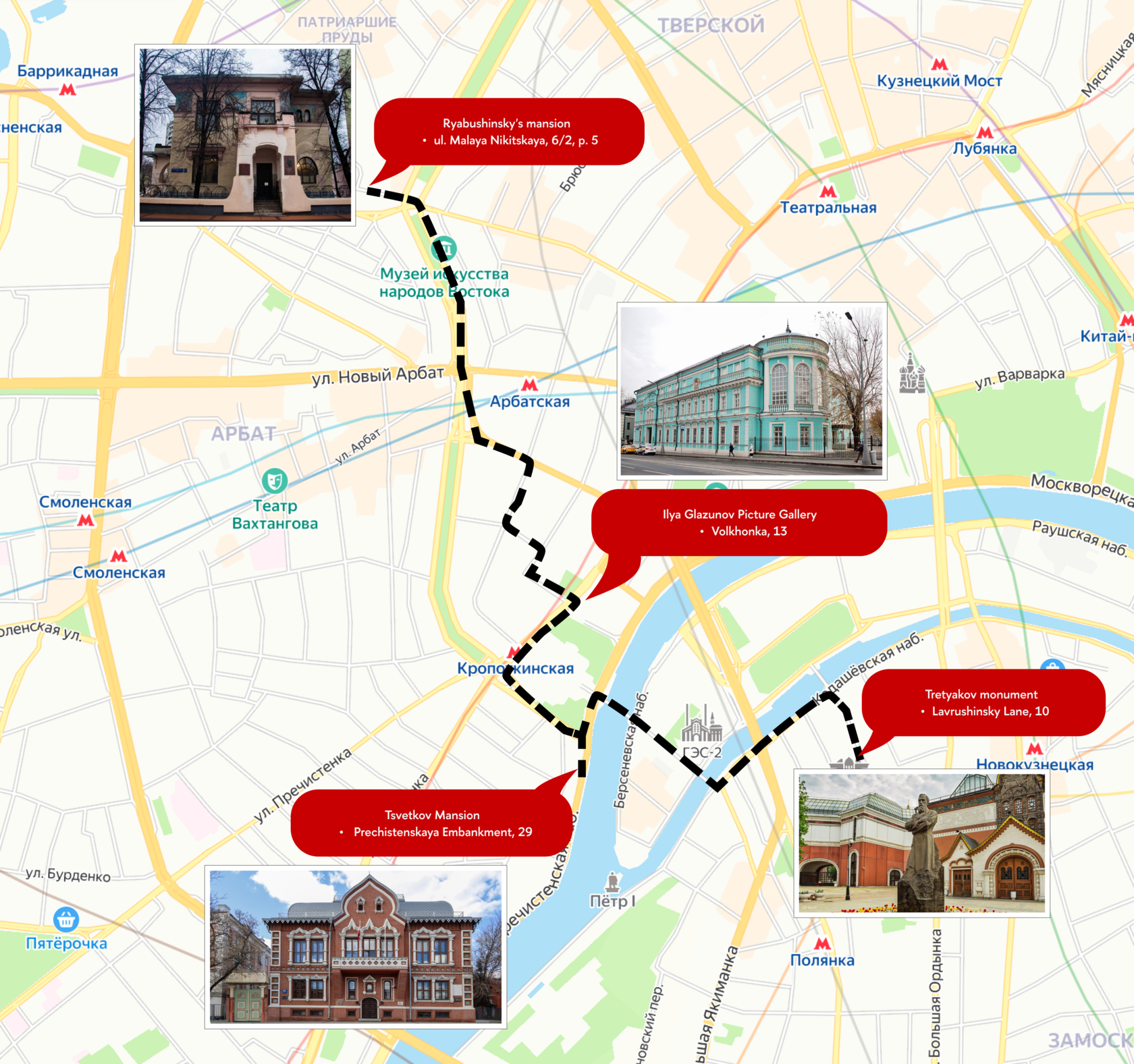
Ilya Glazunov Picture Gallery
Adress: Volkhonka, 13
Adress: Volkhonka, 13
First riddle
The blue house on Volkhonka, each of its windows
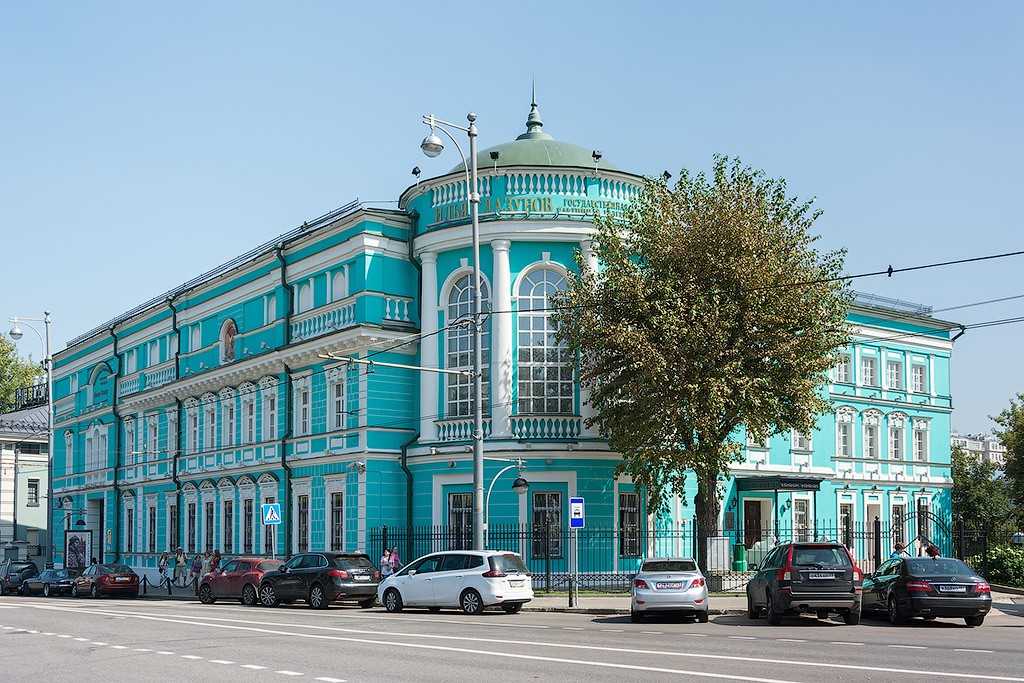
The Blue House on Volkhonka, each window decorated with openwork platbands, can be called “Moscow's Hermitage”. Apart from a slight external similarity, these buildings are united by art. Indeed, walking in the Kropotkinskaya metro area, passing by the Cathedral of Christ the Savior and the Pushkin Museum of Fine Arts, one can pay attention to the Picture Gallery of Ilya Glazunov, an outstanding artist of the 20th century.
The Blue House on Volkhonka, each window decorated with openwork platbands, can be called “Moscow's Hermitage”. Apart from a slight external similarity, these buildings are united by art. Indeed, walking in the Kropotkinskaya metro area, passing by the Cathedral of Christ the Savior and the Pushkin Museum of Fine Arts, one can pay attention to the Picture Gallery of Ilya Glazunov, an outstanding artist of the 20th century.
The building on Volkhonka, of course, has not always served as a museum. The mansion, built in 1740 by Afanasy Grigoriev, at different times belonged to many famous figures of the Russian Empire and the Soviet Union. The blue fairy-tale house was home to the Naryshkin family, General Dokhturov, Colonel Trubetskoy and the artist Vadim Ryndin. Since 1968, this address has been home to the House of Science and Technology.

In 1997, on the 850th anniversary of the capital, the People's Artist of the USSR made a gift to Moscow and handed over 300 works to the city. Then the government decided to thank Ilya Glazunov by allocating a house on Volkhonka Street for their storage. After a long and painstaking restoration, the mansion was opened in 2004, so it is often called one of the youngest art museums. This title is confirmed by the canvases painted in the second half of the last century.
Ilya Glazunov's Picture Gallery is not just a collection of works that you want to look at, but also a reflection of the artist's creative path. The 7 halls of the museum follow a chronological sequence and immerse in different stages of his work. In the gallery you can find both chamber sketches and monumental canvases on social themes, portraits of historical figures, as well as illustrations to the works of Russian writers. If you want to remember the graphic drawings in Russian literature textbooks, you are welcome! In the halls of the house on Volkhonka you can meet Alexander Blok's “The Stranger” and Fyodor Dostoevsky's troubled characters.
Ilya Glazunov's Picture Gallery is not just a collection of works that you want to look at, but also a reflection of the artist's creative path. The 7 halls of the museum follow a chronological sequence and immerse in different stages of his work. In the gallery you can find both chamber sketches and monumental canvases on social themes, portraits of historical figures, as well as illustrations to the works of Russian writers. If you want to remember the graphic drawings in Russian literature textbooks, you are welcome! In the halls of the house on Volkhonka you can meet Alexander Blok's “The Stranger” and Fyodor Dostoevsky's troubled characters.
Ryabushinsky's mansion
Adresi: Malaya Nikitskaya, 6/2, p. 5
Adresi: Malaya Nikitskaya, 6/2, p. 5
Second riddle

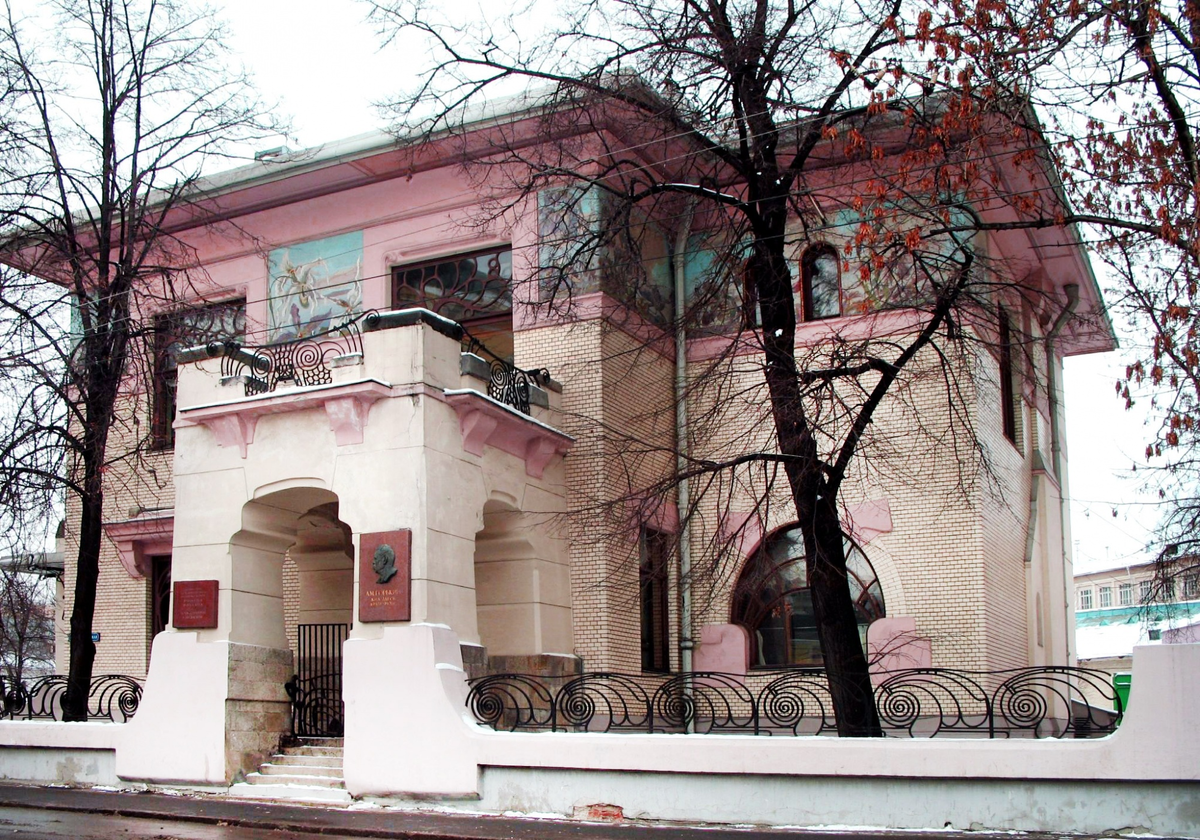
“Majestic, grandiose - nothing to smile at,” - was how one of its owners, Alexei Maximovich Gorky, described the house on Malaya Nikitskaya Street. Since the building was built in 1903, it has had many owners, but the first of them was the famous banker and factory owner S.P. Ryabushinsky.
“There is not a single honest line, not a single right angle,” is what Korney Chukovsky wrote about the house in his personal diary.
Round fittings and an endless number of stained glass windows
- unusual architectural solutions that reflected Art Nouveau, an art movement that infected the whole world in the late 19th and early 20th centuries.
When discussing the interiors of Ryabushinsky's mansion, the comparison with Gaudi's style often comes up. Indeed, the wave staircase, paired floor lamps in the form of dragonfly wings and other immediately eye-catching details are examples of unexpected interpretations of organic soft forms.
Round fittings and an endless number of stained glass windows
- unusual architectural solutions that reflected Art Nouveau, an art movement that infected the whole world in the late 19th and early 20th centuries.
When discussing the interiors of Ryabushinsky's mansion, the comparison with Gaudi's style often comes up. Indeed, the wave staircase, paired floor lamps in the form of dragonfly wings and other immediately eye-catching details are examples of unexpected interpretations of organic soft forms.
While living in the mansion of its first owner, there was a restoration workshop where Ryabushinsky worked with icons. After his emigration in 1917, most of his works were transferred to the Tretyakov Gallery. At the same time, Stepan Pavlovich is better known not because of his work with Old Believer icons. Ryabushinsky, being one of the most influential patrons of the arts, made a significant contribution to the development of culture in the XX century: he donated to the construction of the Architectural Institute, the organization of exhibitions, the first screen adaptation of Leo Tolstoy's novel “War and Peace”.



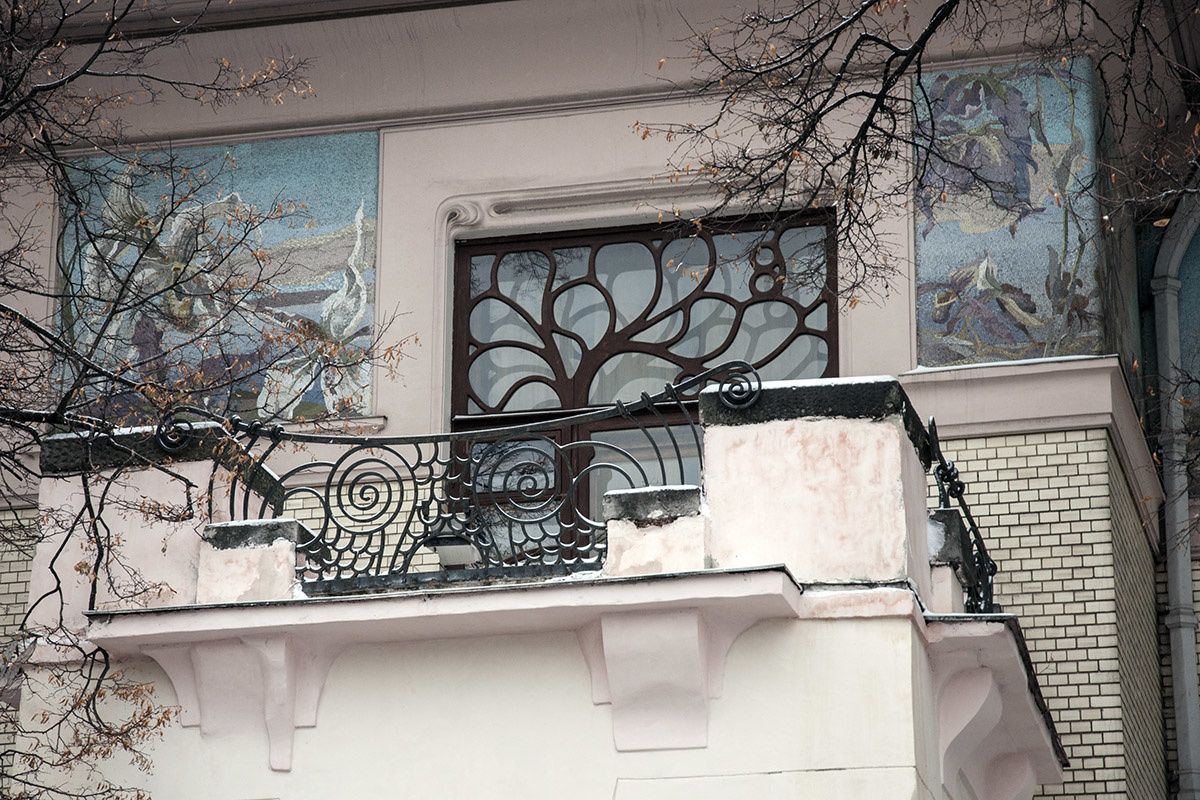
After Ryabushinsky's emigration, the mansion housed the Gosizdat, later, from 1925 to 1931 - the All-Union Society for Cultural Relations, after which the house passed into the possession of Alexei Maximovich Gorky. Interestingly, the building changed its owners so often that in the XX century it even housed a kindergarten where Vasily Stalin, the youngest son of Joseph Vissarionovich, went.


Tsvetkov Mansion
Adress: Prechistenskaya Embankment, 29
Adress: Prechistenskaya Embankment, 29
Third riddle
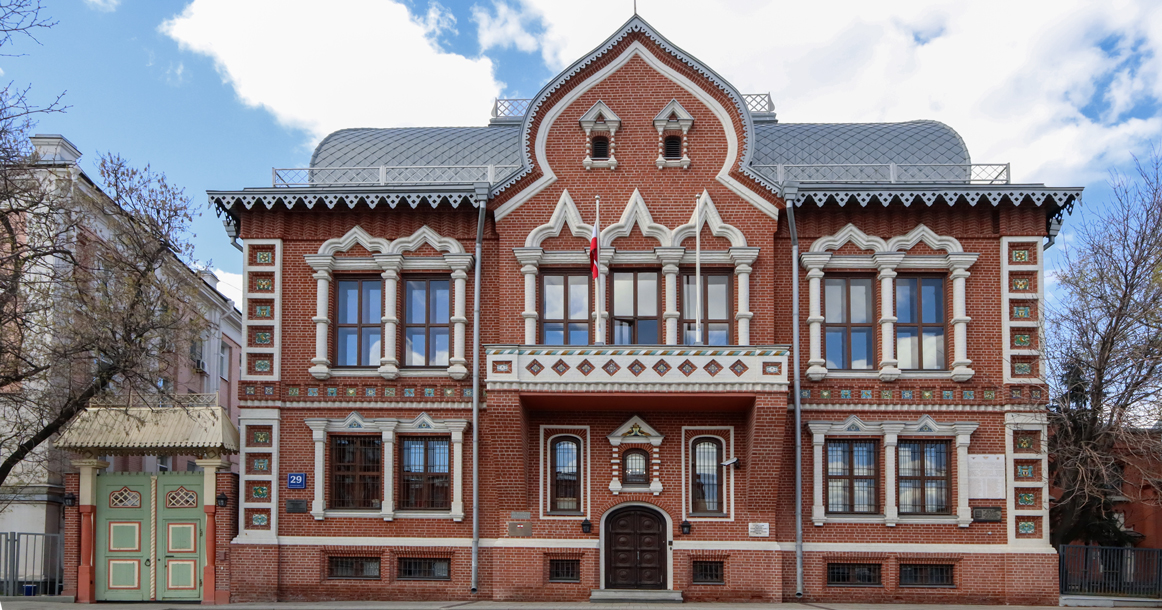
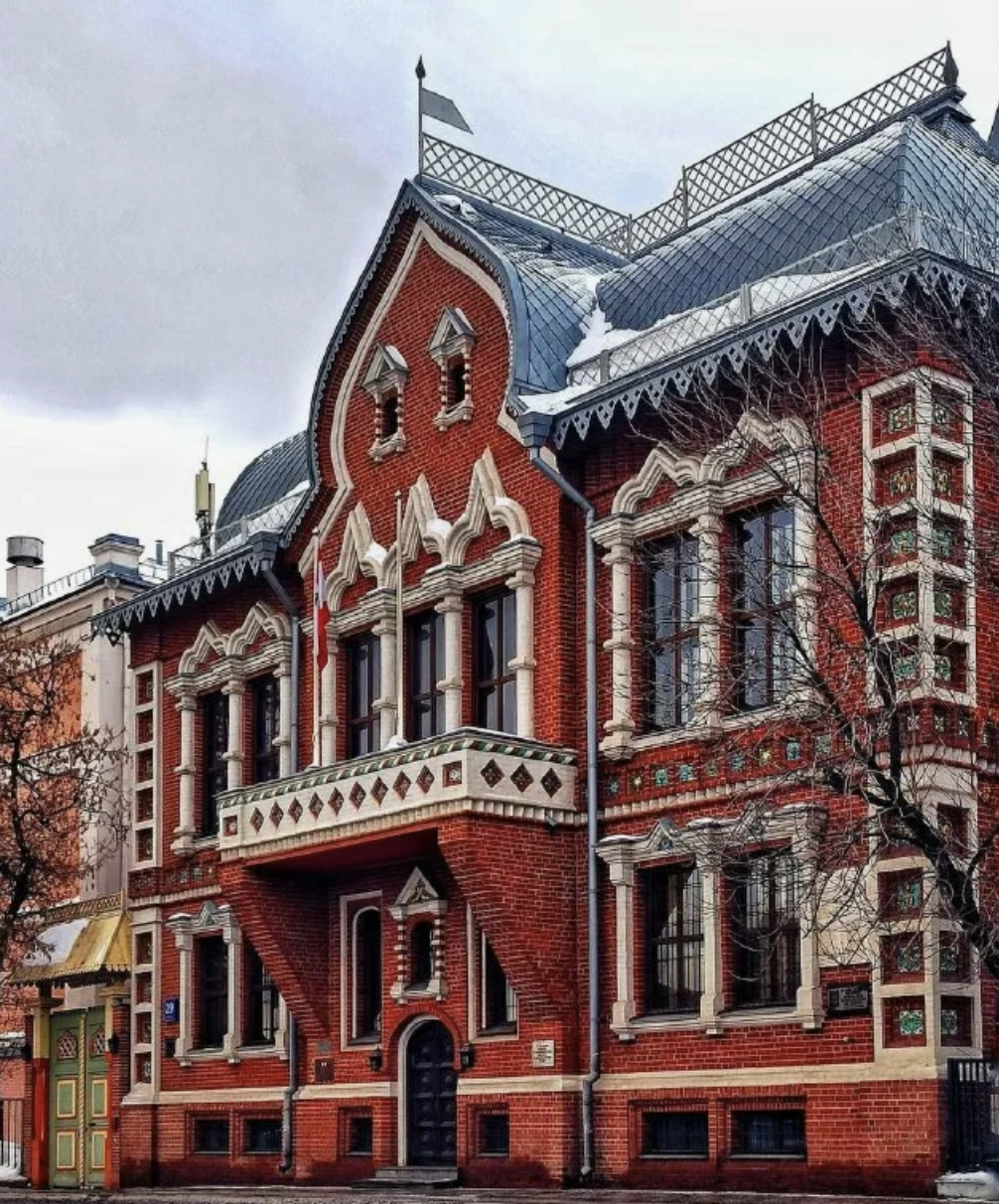
The bright brick house, reminiscent of a fairy tale, is hard to ignore. The two-story mansion with a basement and an open stone porch is one of the surviving examples of Neo-Russian style estates. This building on Prechistenskaya Embankment was built especially for the banker Ivan Yemenevich Tsvetkov according to the project of the famous painter Vasily Mikhailovich Vasnetsov at the end of the XIX century. However, the patron of the arts never lived in this house; it was already known at the stage of designing the estate that its main purpose was to house a collection of paintings.
The Neo-Russian style of construction was not chosen by chance. Tsvetkov wanted to build real boyar chambers to create a gallery. To reflect the originality of the collection in the interior and exterior of the estate, the patron of the arts traveled to various cities, studying the features of Old Russian architecture. The banker himself visited Yaroslavl, Suzdal and Rostov, shared his ideas with Viktor Mikhailovich Vasnetsov and carefully supervised the execution of the project, which was handled by Boris Shnaubert and Vasily Bashkirov. The work took more than 2 years and cost a huge amount of money at that time - 96 thousand rubles.


As one of the most influential bankers of the capital at the end of the 19th century, Ivan Emenyevich put his heart into art, collecting paintings by famous artists. The owner liked to organize receptions, showing his collection, placed in all 12 rooms of the mansion. There were so many objects that the exposition started from the entrance hall of the house. Canvases were even hung under windows and hangers, and massive wooden chests were installed in the halls to house some of the sculptures.
In the collection of the patron of the arts, one could find paintings by artists about whom the whole country was talking at the beginning of the XX century. “Gathering” by Ilya Repin, ‘Catching Fish with a Rake’ by Vasily Petrov, works by Viktor Vasnetsov himself, whose sketches were used to create even such artistic details as platbands, as well as paintings by Bryullov, Levitan and Makovsky - Ivan Tsvetkov's collection was a point of attraction for art lovers of the past century.
In the collection of the patron of the arts, one could find paintings by artists about whom the whole country was talking at the beginning of the XX century. “Gathering” by Ilya Repin, ‘Catching Fish with a Rake’ by Vasily Petrov, works by Viktor Vasnetsov himself, whose sketches were used to create even such artistic details as platbands, as well as paintings by Bryullov, Levitan and Makovsky - Ivan Tsvetkov's collection was a point of attraction for art lovers of the past century.
After the Great Patriotic War these paintings were taken over by various art museums of the country. Now the building on Prechistenskaya Embankment is at the disposal of the Ministry of Foreign Affairs of the Russian Federation, and tourists can visit it only once a year.


Tretyakov monument
Adress: Lavrushinsky Lane, 10
Adress: Lavrushinsky Lane, 10
Fourth riddle
The Tretyakov Gallery is one of those places that immediately comes to mind when listing Moscow locations.
But few people know that the figure of its founder stands at the entrance to the famous museum. Nevertheless, without Pavel Tretyakov, a patron of the arts of the 19th century, there would not have been that unique collection of masterpieces of world art, which is now being talked about.
But few people know that the figure of its founder stands at the entrance to the famous museum. Nevertheless, without Pavel Tretyakov, a patron of the arts of the 19th century, there would not have been that unique collection of masterpieces of world art, which is now being talked about.
Pavel Tretyakov, one of the most famous collectors in Russia, together with his brother Sergei, purchased a mansion in Lavrushinsky Lane in 1851, laying the foundation for the future museum.
As a consequence, rooms for specific halls and expositions were added to the building.


The year of the foundation of the gallery can be considered 1856. It was then that the patron of the arts had his first painting - Vasily Grigorievich Khudyakov's “Skirmish with Finnish Smugglers”. More than 35 years later, in 1892, the collection contained more than two thousand paintings and sculptures, which Pavel Mikhailovich donated to Moscow instead of the gallery building.
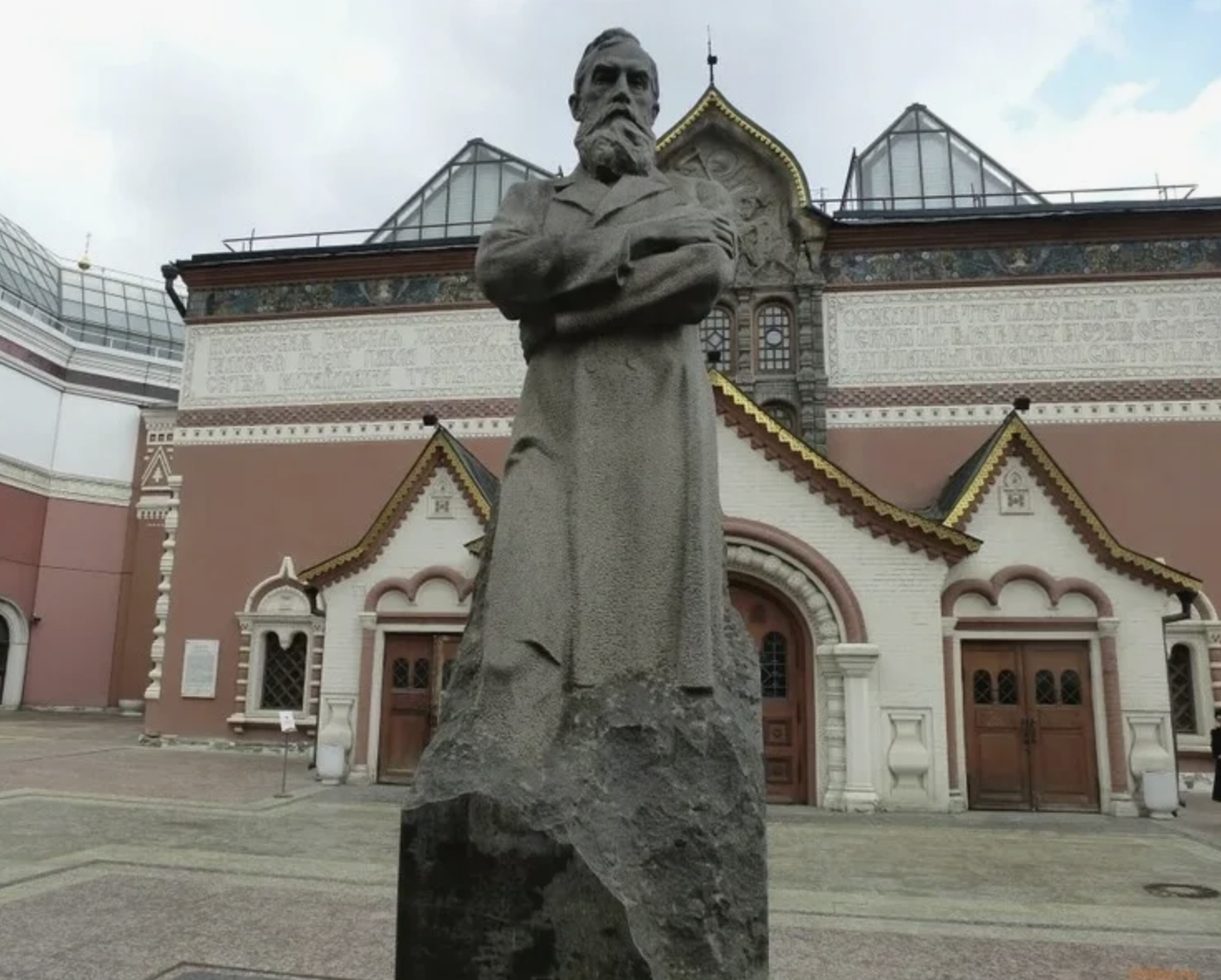
Now, in front of the entrance to the main art museum of the capital, there is a figure of its founder, friendly inviting everyone to visit. Interestingly, the monument has not always occupied this place. During the Soviet era, in the same section of Lavrushinsky Lane you could see a bust of Lenin or a sculpture of Stalin.
Now these monuments have been moved to the inner courtyard of the museum, and since 1980 the work of Igor Rogozhin and Alexander Kibalnikov has occupied the place of honor in front of the entrance to the museum. When looking at the sculpture, art historians can immediately notice its external similarity to the portrait of Tretyakov painted by Repin. And this observation will be accurate, because in the figure of the patron of the arts the features caught by the artist can be traced: a pensive look, crossed arms and inspiration by something beautiful.
Now, in front of the entrance to the main art museum of the capital, there is a figure of its founder, friendly inviting everyone to visit. Interestingly, the monument has not always occupied this place. During the Soviet era, in the same section of Lavrushinsky Lane you could see a bust of Lenin or a sculpture of Stalin.
Now these monuments have been moved to the inner courtyard of the museum, and since 1980 the work of Igor Rogozhin and Alexander Kibalnikov has occupied the place of honor in front of the entrance to the museum. When looking at the sculpture, art historians can immediately notice its external similarity to the portrait of Tretyakov painted by Repin. And this observation will be accurate, because in the figure of the patron of the arts the features caught by the artist can be traced: a pensive look, crossed arms and inspiration by something beautiful.