Moscow eclecticism.
Welcome to the world of architectural eclecticism! This unit will lead you in the footsteps of daring architects who, like talented conductors, mixed different musical styles to create unique symphonies of stone and brick.
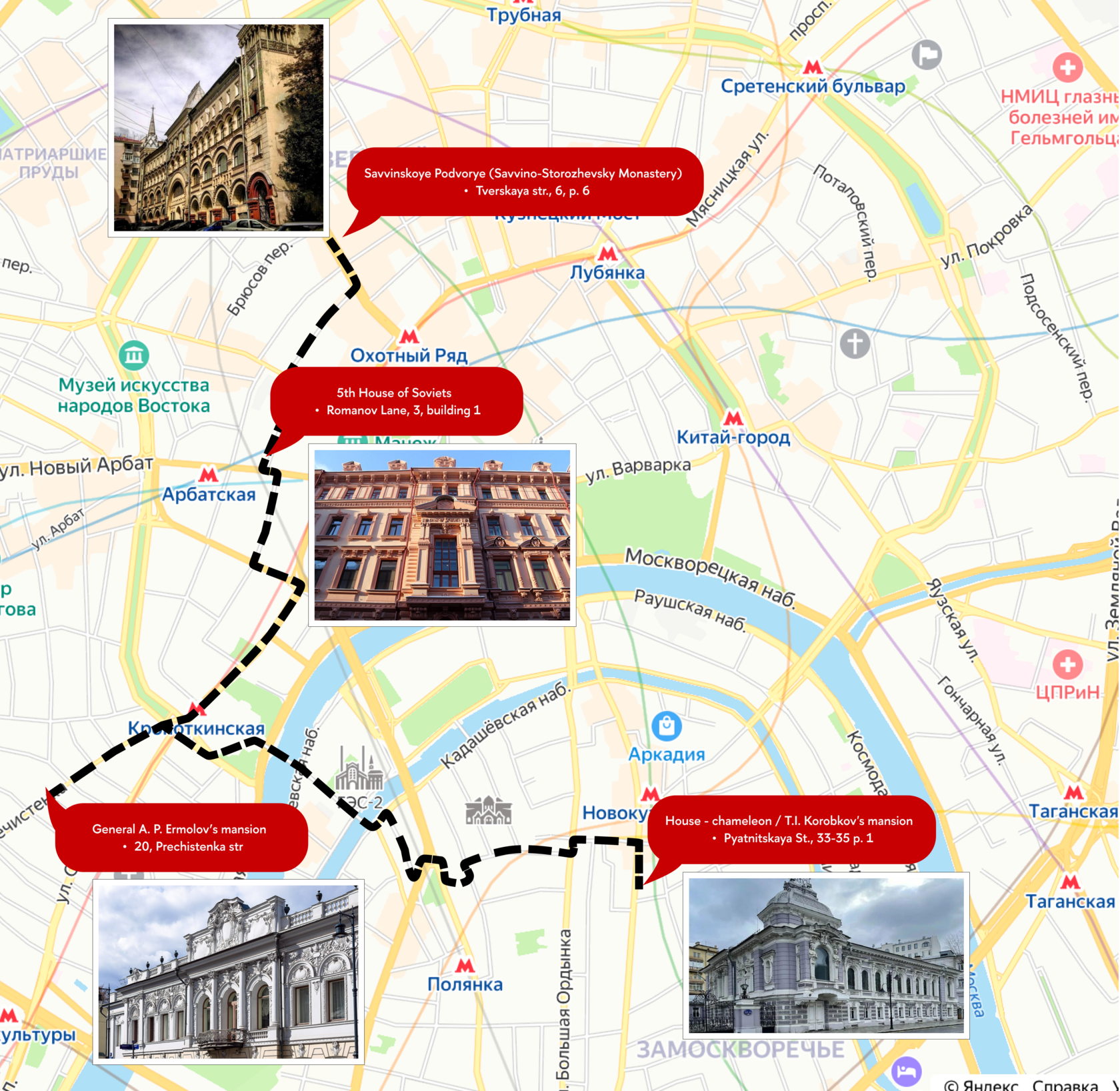
5th House of Soviets
Address: Romanov Lane, 3, building 1
Address: Romanov Lane, 3, building 1
First riddle

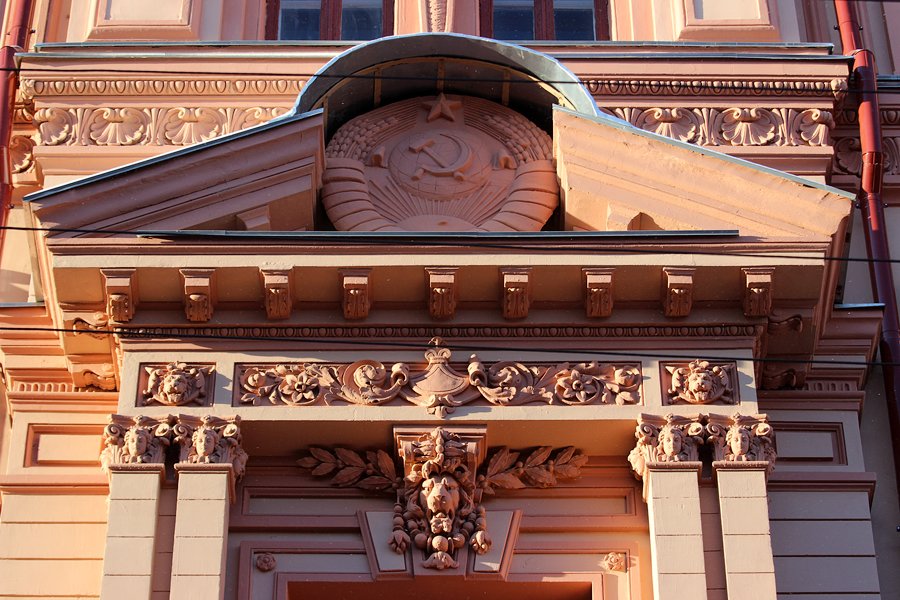
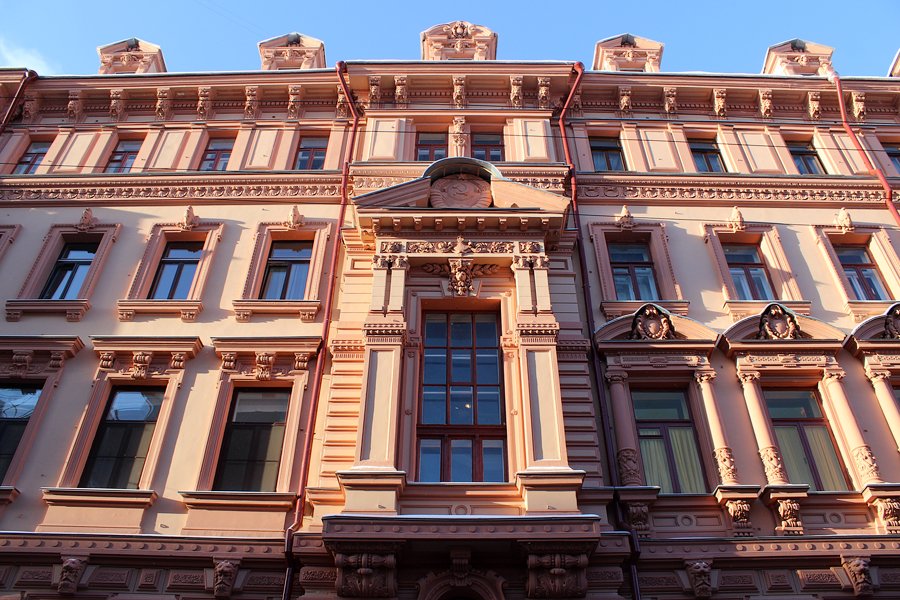
Located in close proximity to the Kremlin, this house, built in 1895-1898 in the Eclectic style, was originally a revenue house belonging to Count Alexander Dmitrievich Sheremetev. The return of the capital to Moscow in 1918 played a key role in the fate of this building. Amid the post-revolutionary chaos and lack of construction, the Soviet government housed itself in the Kremlin, hotels and some revenue houses, which included the Sheremetev house.
The Sheremetev's house, characterised by luxurious architectural decoration, was considered one of the most prestigious in Moscow. The architect chosen was A.F. Meisner, the court architect of the Sheremetevs, who designed the house in the French Baroque style with elements of eclecticism. The house forms a carriage house, covering the front courtyard on three sides, separated from the street by a fence with a gate. Inside the courtyard there is a fountain, a rare example of surviving urban sculpture.
After the revolution, the house was renamed the 5th House of Soviets and became the residence of prominent figures of post-revolutionary Russia. First of all, military leaders - Marshals Budyonny, Voroshilov, Zhukov, Konev, Rokossovsky, Malinovsky, Chuikov, Sudets, as well as Yakov Stalin and Svetlana Alliluyeva - lived here.
Paradoxically, the house preserved communal flats in which people of ordinary professions lived. High-ranking tenants and their families enjoyed additional benefits - they ate in a special dining room, were treated in the ‘Kremlin’ polyclinic, travelled in official cars, used official furniture. However, their children played in the courtyard with children of ordinary citizens and from the 1950s went to a regular school.
Paradoxically, the house preserved communal flats in which people of ordinary professions lived. High-ranking tenants and their families enjoyed additional benefits - they ate in a special dining room, were treated in the ‘Kremlin’ polyclinic, travelled in official cars, used official furniture. However, their children played in the courtyard with children of ordinary citizens and from the 1950s went to a regular school.


General A. P. Ermolov’s mansion
Address: 20, Prechistenka str
Address: 20, Prechistenka str
Second riddle


A fire in 1812 destroyed the building, but after the Patriotic War it was replaced by a new two-storey mansion with a classical facade typical of Moscow architecture.
In different years the house belonged to various distinguished families. Countess Orlova, known for her eccentricity, was famous for sitting for hours at the gates of the mansion, sending air kisses to passers-by. For this she was nicknamed ‘the fool Matryoshka doll’.
After her, the mansion went to the hero of the Patriotic War, General Ermolov. He collected here the richest library, which numbered more than 9 thousand editions. Yermolov lived in the house on Prechistenka for the last 10 years of his life.
In different years the house belonged to various distinguished families. Countess Orlova, known for her eccentricity, was famous for sitting for hours at the gates of the mansion, sending air kisses to passers-by. For this she was nicknamed ‘the fool Matryoshka doll’.
After her, the mansion went to the hero of the Patriotic War, General Ermolov. He collected here the richest library, which numbered more than 9 thousand editions. Yermolov lived in the house on Prechistenka for the last 10 years of his life.
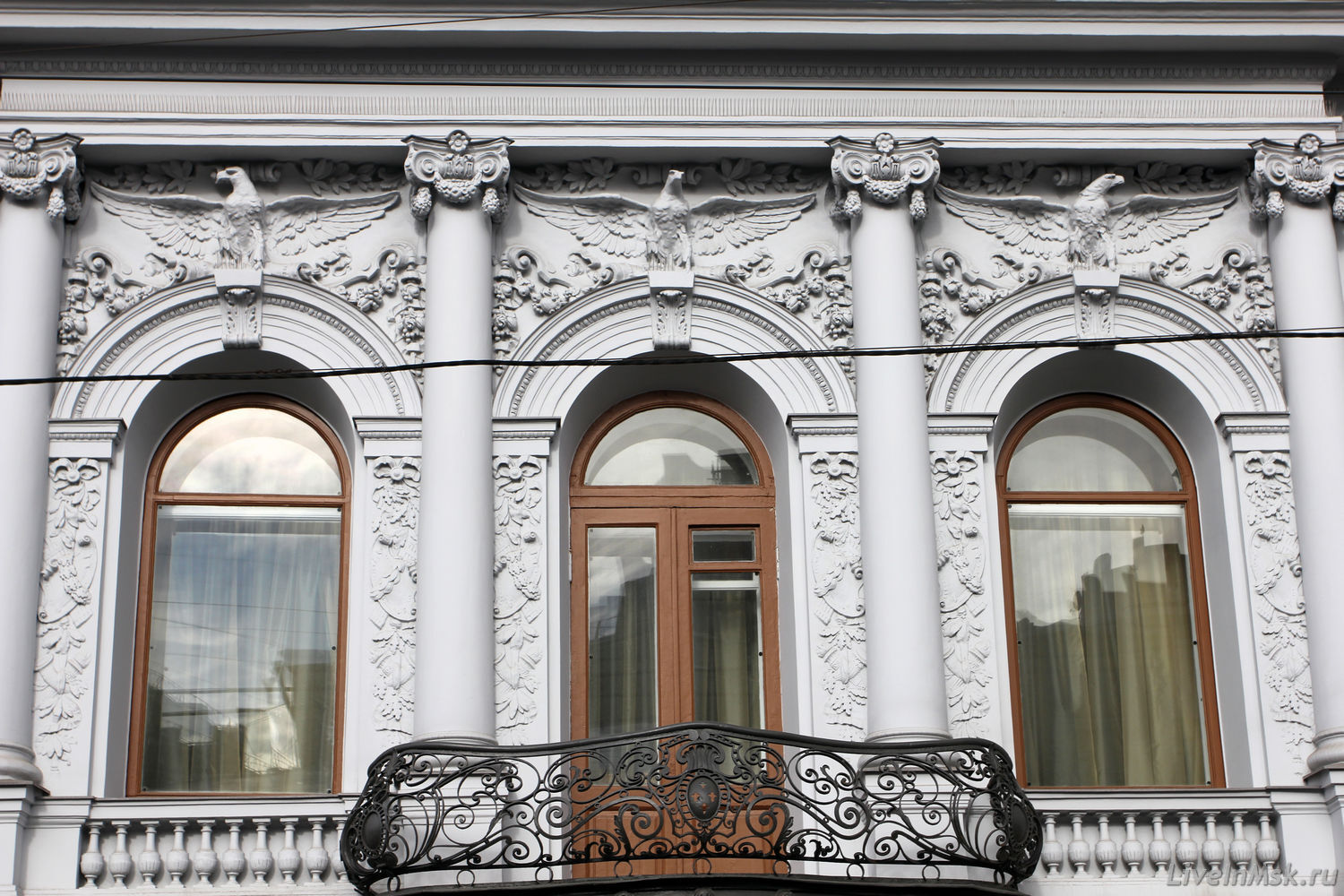
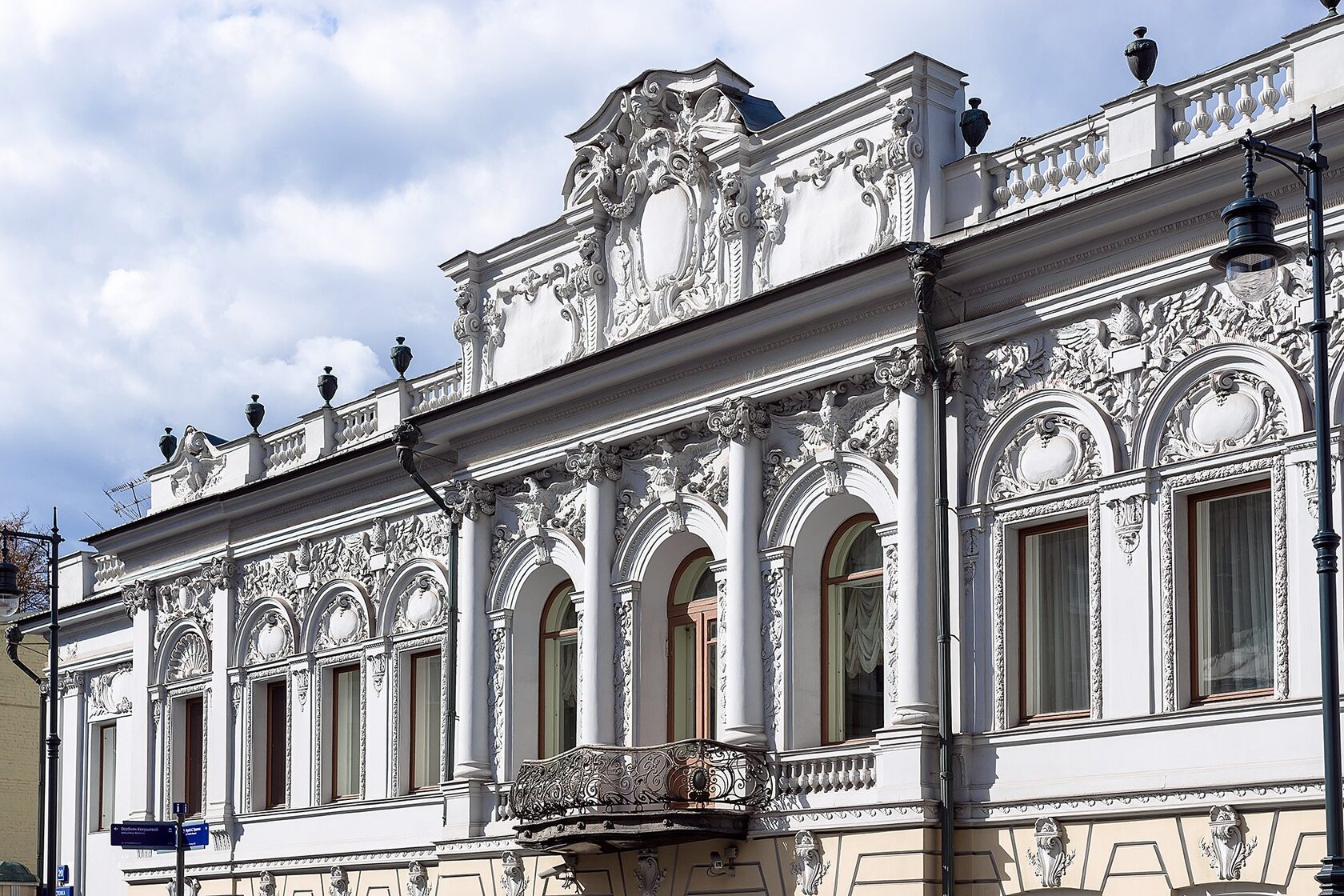
In the early 20th century, the mansion was bought by the industrialist Ushkov, who made his fortune in the tea trade. He completely rebuilt the house, creating an exact copy of his Kazan mansion designed by Mufke. The facade was decorated with moulded eagles, griffins, lion heads and oak branches. A graceful balcony appeared on the first floor.
Since 1930, the building has been home to the Main Production and Commercial Directorate for servicing the diplomatic corps under the Ministry of Foreign Affairs of the Russian Federation. In 1999, the restoration of this historic building won the competition for the best restoration of Moscow's architectural monuments.
Since 1930, the building has been home to the Main Production and Commercial Directorate for servicing the diplomatic corps under the Ministry of Foreign Affairs of the Russian Federation. In 1999, the restoration of this historic building won the competition for the best restoration of Moscow's architectural monuments.
The history of the building began in the XVIII century. Presumably, the architect of the majestic house was Matvey Kazakov, one of the greatest representatives of Russian pseudo-Gothicism.




House - chameleon / T.I. Korobkov's mansion
Address: Pyatnitskaya St., 33-35 p. 1
Address: Pyatnitskaya St., 33-35 p. 1
Third riddle

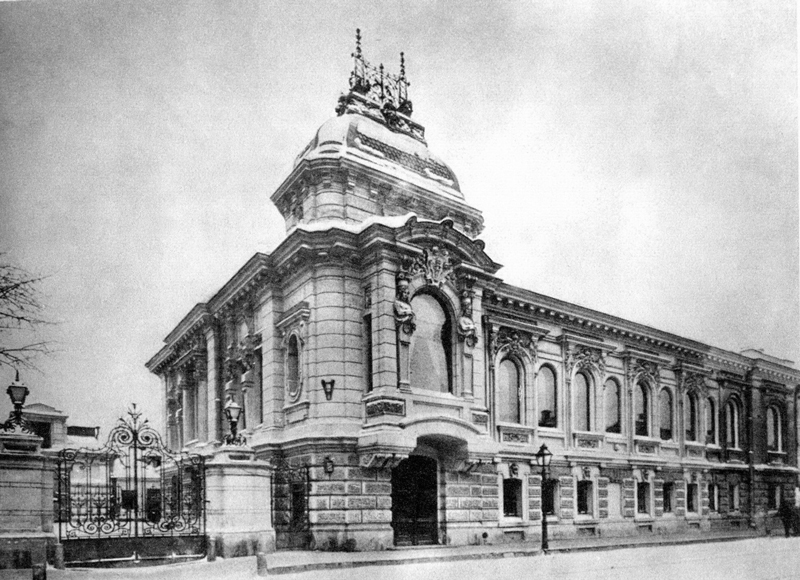
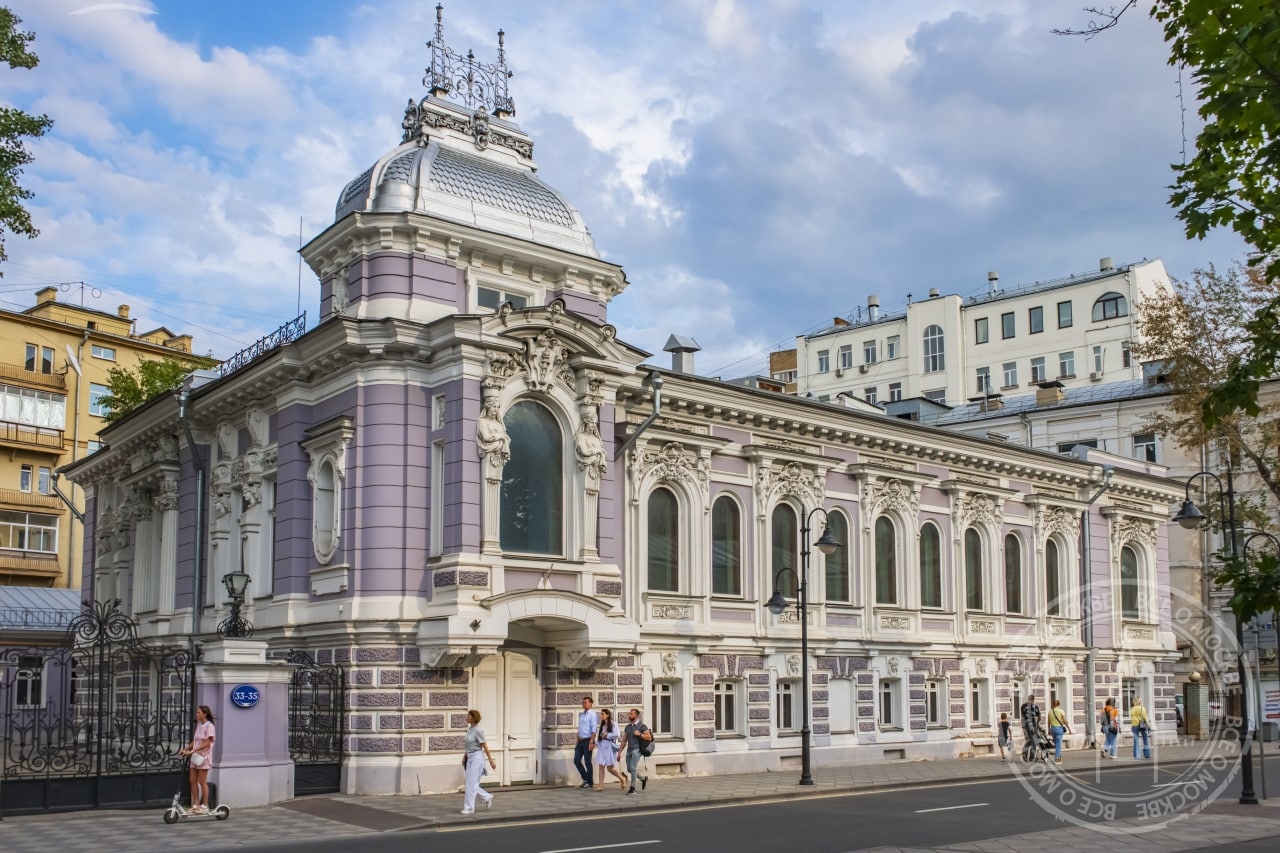
Korobkov's mansion at 33 Pyatnitskaya Street has acquired its current appearance thanks to a multi-stage rebuilding. The initial object was a small two-storey building of 1866, consisting of seven window bays, which belonged to the merchant P.A. Tugarinov. By his order in 1871-1875 side extensions and a one-storey outbuilding were added to the house from the side of Pyatnitskaya Street.
Subsequently, in 1894, the mansion passed into the possession of the honourable citizen Trifon Ivanovich Korobkov and his wife Olga Petrovna. They decided to expand and rebuild the house, inviting the famous architect Lev Kekushev for this purpose.
Subsequently, in 1894, the mansion passed into the possession of the honourable citizen Trifon Ivanovich Korobkov and his wife Olga Petrovna. They decided to expand and rebuild the house, inviting the famous architect Lev Kekushev for this purpose.
Kekushev proposed to add a wing with a turret and a new front entrance to the existing building, as well as to decorate the fence with an expressive lattice. The facades were decorated in the neo-Greek style, characterised by restraint and elegance.
The construction work was completed in 1896, and the renovated mansion was highly praised in the press, becoming one of the most striking creations of the talented architect.
The Korobkov mansion, carefully preserved over the years, is striking in its authenticity. The interiors and facade of the building, which are now objects of cultural heritage of federal significance, have remained virtually unchanged since it was built.
The construction work was completed in 1896, and the renovated mansion was highly praised in the press, becoming one of the most striking creations of the talented architect.
The Korobkov mansion, carefully preserved over the years, is striking in its authenticity. The interiors and facade of the building, which are now objects of cultural heritage of federal significance, have remained virtually unchanged since it was built.
In 2013-2015, the mansion underwent a comprehensive restoration to restore its historical appearance. In the course of the work, a fragment of the original façade colouring, hidden under layers of paint, was uncovered. It turned out that the house was painted in an unusual lilac-ink colour, which acquired a lilac tint in the sun. The restorers returned the building to its rare colour, for which the mansion was nicknamed ‘Chameleon’.



Savvinskoye Podvorye
Address: Tverskaya str., 6, p. 6
Address: Tverskaya str., 6, p. 6
Fourth riddle
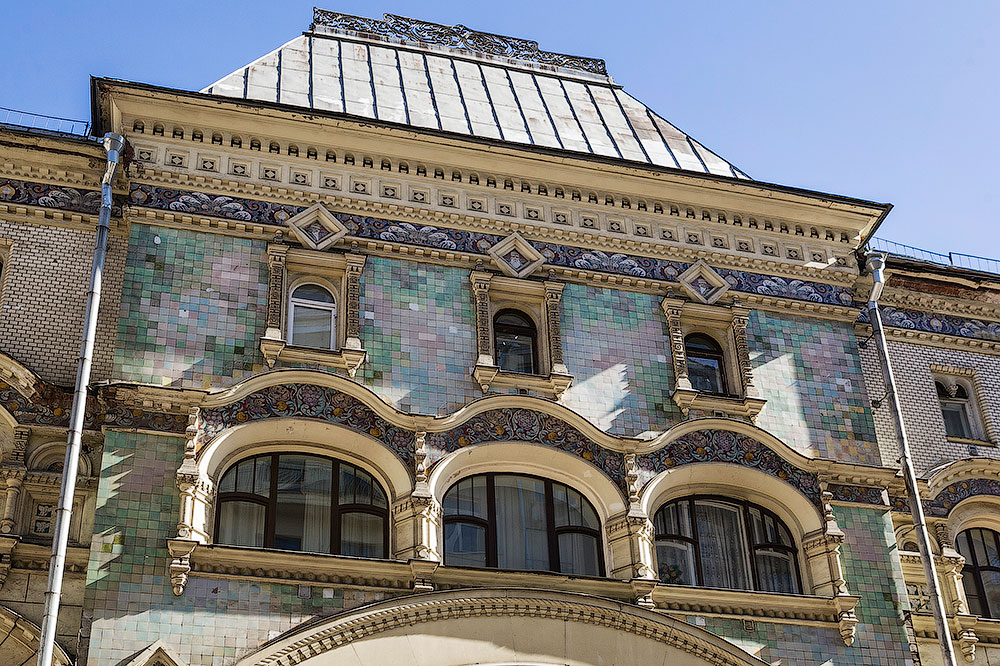
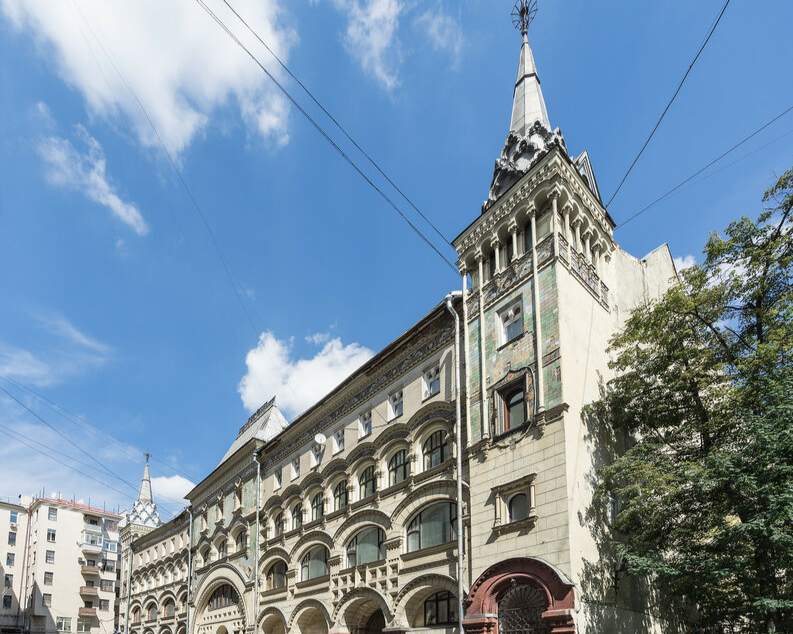
On the site of the modern Savvinsky suburbs on Tverskaya Street in Moscow, the Ascension Monastery was located from the 15th century. In 1651, by decree of Tsar Alexei Mikhailovich, the deserted monastery was transferred to the Zvenigorod Savvino-Storozhevsky Monastery, which at that time was considered one of the most important in the state.
Ivan Kuznetsov designed a unique facade for the Savvinsky monastery, decorated with towers, windows of different shapes and sizes with platbands and arches. The building was given a special beauty by coloured ceramic tiles made in Abramtsevo and Germany, the designs for which were created by the architect himself.
In 1935, an architectural team consisting of Vladimir Semyonov and Sergei Chernyshev developed a plan for the reconstruction of Moscow that envisaged the extension of Gorky Street. According to the plan, almost all historical buildings were to be demolished and replaced with buildings in the Stalinist Empire style. However, some historic buildings, including the Savvinsky palace, avoided demolition and were moved deep into the street.
A frame was installed around the building to protect it from demolition. Then the building was carefully separated from the old foundation and moved with the help of winches. The house's utilities were reconnected using flexible cables that worked even during the move. The residents were not aware of the exact date when the work began.
After much preparation, on 4 March 1939, the operation began. The relocation was so smooth that most of the residents did not even wake up. In one night the Savvinsky farmstead was moved 50 metres deep into Tverskaya Street.
Ivan Kuznetsov designed a unique facade for the Savvinsky monastery, decorated with towers, windows of different shapes and sizes with platbands and arches. The building was given a special beauty by coloured ceramic tiles made in Abramtsevo and Germany, the designs for which were created by the architect himself.
In 1935, an architectural team consisting of Vladimir Semyonov and Sergei Chernyshev developed a plan for the reconstruction of Moscow that envisaged the extension of Gorky Street. According to the plan, almost all historical buildings were to be demolished and replaced with buildings in the Stalinist Empire style. However, some historic buildings, including the Savvinsky palace, avoided demolition and were moved deep into the street.
A frame was installed around the building to protect it from demolition. Then the building was carefully separated from the old foundation and moved with the help of winches. The house's utilities were reconnected using flexible cables that worked even during the move. The residents were not aware of the exact date when the work began.
After much preparation, on 4 March 1939, the operation began. The relocation was so smooth that most of the residents did not even wake up. In one night the Savvinsky farmstead was moved 50 metres deep into Tverskaya Street.