
Moscow, which was built by Shechtel
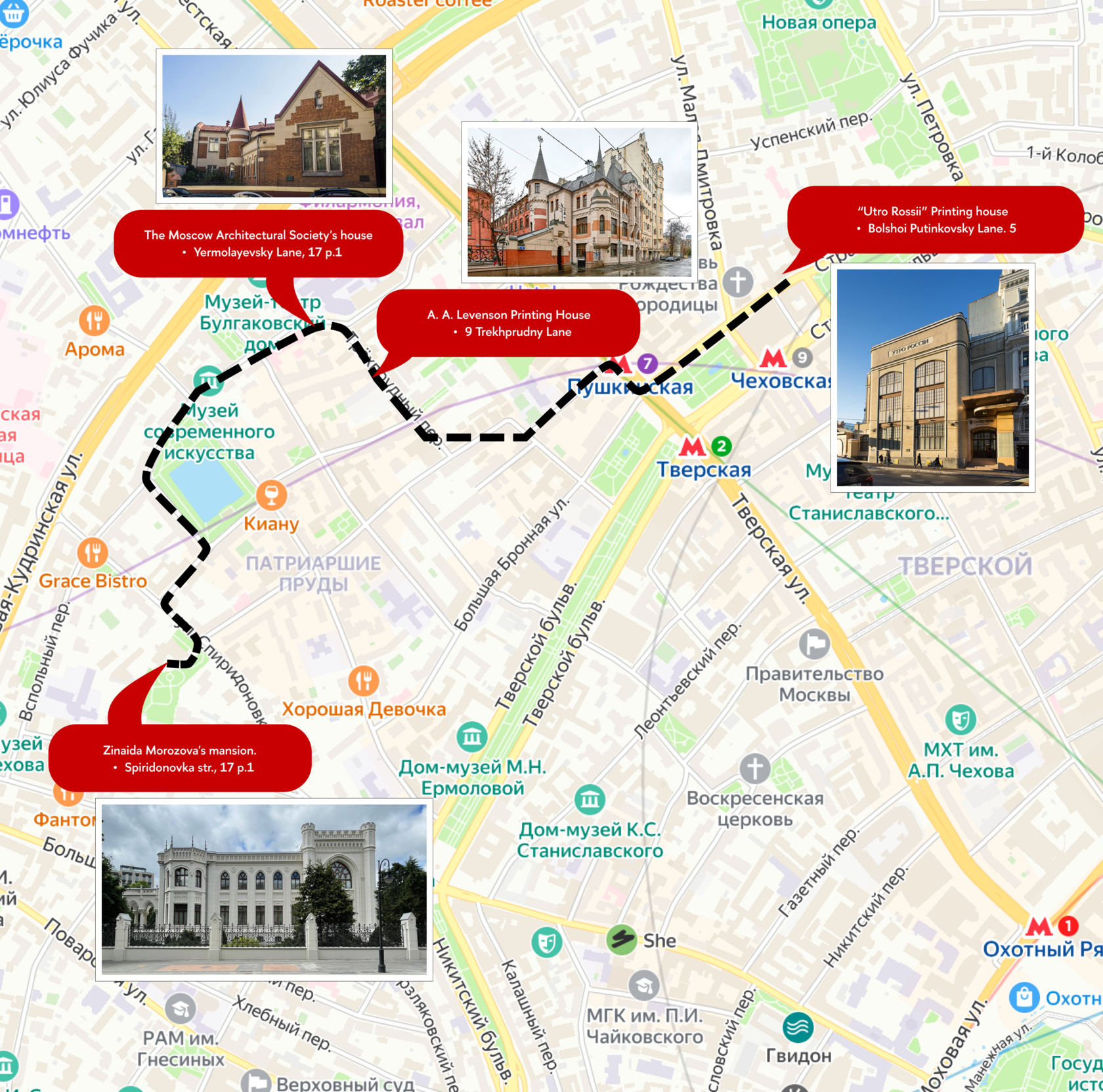
Walking along Moscow streets, enjoying the beautiful architecture and incredible buildings, we don't even think about who is behind this grandeur. In this block we will unveil the veil of mystery and learn about several architectural creations of the outstanding architect Fedor Shechtel.
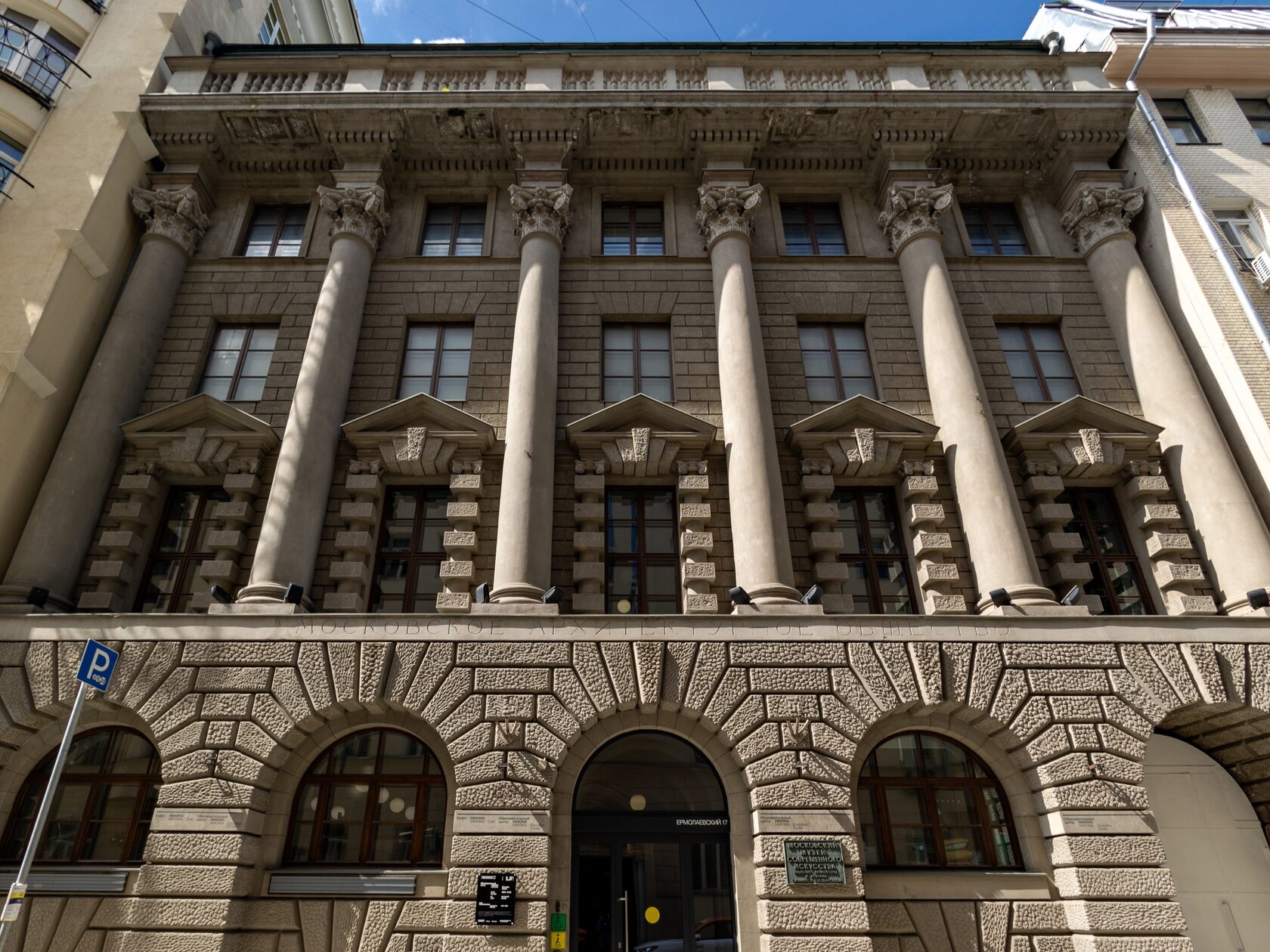
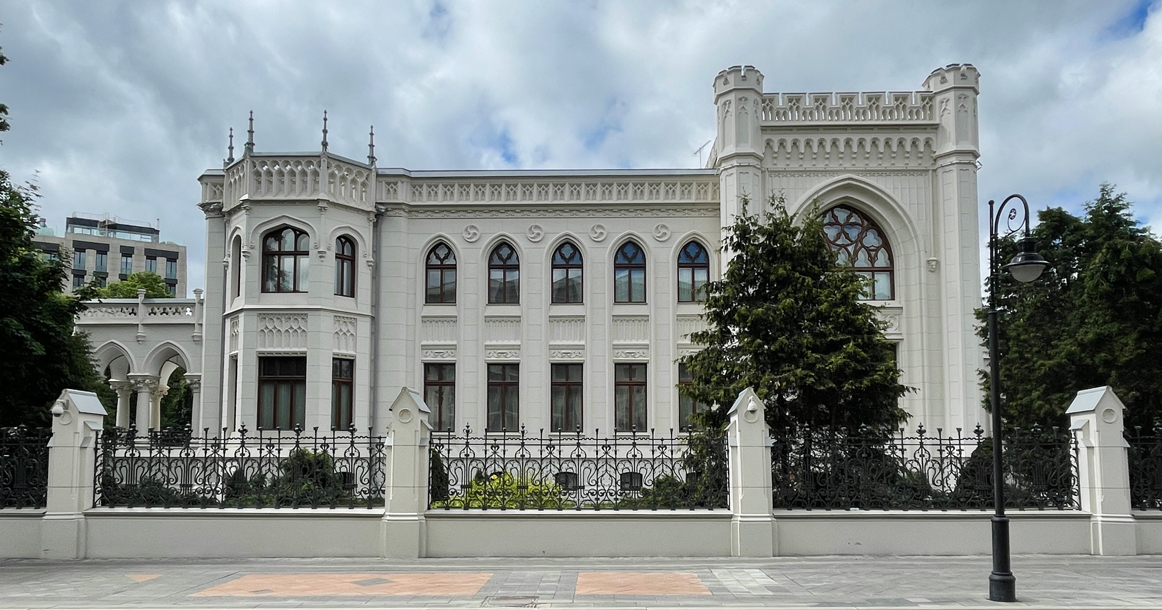
The Moscow Architectural Society's house
Address: Yermolayevsky Lane, 17 p.1
Address: Yermolayevsky Lane, 17 p.1
First riddle
The impressive neoclassical house in Yermolayevsky Lane, built in 1912-1915 to a design by architect D.S. Markov, served as both a lucrative house and the headquarters of the Moscow Architectural Society.
This society, founded in 1867 by architect Mikhail Dorimedontovich Bykovsky, was the first association of architects and civil engineers in Russia. Its aim was to develop and disseminate architectural knowledge in Russia, both technical and artistic. The Society was actively engaged in scientific activities, studying the history of architecture, organising exhibitions and competitions, as well as translating and publishing the works of foreign architects.
By 1912, when the construction of the new building of the society began, it already had 152 members. The project designed by D.S. Markov was selected in a competition and became the embodiment of the society's values and ideals.
This society, founded in 1867 by architect Mikhail Dorimedontovich Bykovsky, was the first association of architects and civil engineers in Russia. Its aim was to develop and disseminate architectural knowledge in Russia, both technical and artistic. The Society was actively engaged in scientific activities, studying the history of architecture, organising exhibitions and competitions, as well as translating and publishing the works of foreign architects.
By 1912, when the construction of the new building of the society began, it already had 152 members. The project designed by D.S. Markov was selected in a competition and became the embodiment of the society's values and ideals.
During its existence, the Moscow Architectural Society was headed by the outstanding architects F.O. Shechtel and A.V. Shchusev. Despite the change of the political regime, the society retained its traditions and continued to be active, organising lectures, competitions and taking part in work to protect architectural monuments.
During Soviet times the building belonged to the Moscow Union of Artists, where exhibitions of young artists and creative workshops were held. Since 2003, the building has been the exhibition space of the Moscow Museum of Modern Art.
Thus, the building, which began its history as the headquarters of the Moscow Architectural Society, has managed to change several functions during its history, remaining the centre of creative life and architectural history.
During Soviet times the building belonged to the Moscow Union of Artists, where exhibitions of young artists and creative workshops were held. Since 2003, the building has been the exhibition space of the Moscow Museum of Modern Art.
Thus, the building, which began its history as the headquarters of the Moscow Architectural Society, has managed to change several functions during its history, remaining the centre of creative life and architectural history.


Zinaida Morozova's mansion
Address: Spiridonovka str., 17 p.1
Address: Spiridonovka str., 17 p.1
Second riddle
The construction of the Morozov family mansion on Spiridonovka Street lasted five years, from 1893 to 1898.
Savva Morozov, inspired by his stay in England, where he studied at Cambridge and mastered textile production in Manchester, dreamed of a house in the English style. He invited the young and promising architect Fedor Shechtel, with whom he was already familiar from his work on the design of his summer house in the Moscow region, to realise his dream.
Savva Morozov, inspired by his stay in England, where he studied at Cambridge and mastered textile production in Manchester, dreamed of a house in the English style. He invited the young and promising architect Fedor Shechtel, with whom he was already familiar from his work on the design of his summer house in the Moscow region, to realise his dream.
Shechtel designed the mansion in just two months, creating more than 600 drawings to think about every detail. Inspired by medieval English castles, he designed a building with pointed towers, lancet windows and decorative elements reminiscent of the battlements of a fortress wall.
Inside the mansion there were numerous drawing rooms, a dining room, a billiard room, Zinaida Morozova's boudoir, Savva Morozov's study and children's rooms. Shekhtel created an eclectic style in the interior, combining Gothic, Classicism, Baroque and Empire. The front hall was decorated with carved wooden panels and staircase railings with images of fantastic creatures made at the factory of Pavel Schmita, the official supplier of furniture for the imperial house.
Zinaida Morozova, the owner of the luxurious new mansion, quickly turned it into the centre of Moscow's social life. Her salon became a meeting place for famous figures of art and culture - Fyodor Chaliapin, Anton Chekhov, Vladimir Nemirovich-Danchenko, as well as representatives of the imperial family.
The Morozovs lived in the Spiridonovka mansion for 11 years. After her husband's death, Zinaida Morozova did not want to stay in the house: she claimed that at night she could hear strange sounds from her husband's study, like his footsteps and coughs. In 1909, she sold the mansion to entrepreneur Mikhail Ryabushinsky.
Inside the mansion there were numerous drawing rooms, a dining room, a billiard room, Zinaida Morozova's boudoir, Savva Morozov's study and children's rooms. Shekhtel created an eclectic style in the interior, combining Gothic, Classicism, Baroque and Empire. The front hall was decorated with carved wooden panels and staircase railings with images of fantastic creatures made at the factory of Pavel Schmita, the official supplier of furniture for the imperial house.
Zinaida Morozova, the owner of the luxurious new mansion, quickly turned it into the centre of Moscow's social life. Her salon became a meeting place for famous figures of art and culture - Fyodor Chaliapin, Anton Chekhov, Vladimir Nemirovich-Danchenko, as well as representatives of the imperial family.
The Morozovs lived in the Spiridonovka mansion for 11 years. After her husband's death, Zinaida Morozova did not want to stay in the house: she claimed that at night she could hear strange sounds from her husband's study, like his footsteps and coughs. In 1909, she sold the mansion to entrepreneur Mikhail Ryabushinsky.


A. A. Levenson Printing House
Address: 9 Trekhprudny Lane
Address: 9 Trekhprudny Lane
Third riddle

In 1881, Alexander Alexandrovich Levenson founded a printing house that specialised in high-quality reproduction of Old Russian manuscripts, production of luxuriously illustrated books and lithographs. By the end of the 19th century this enterprise had already become a major centre of the printing industry.
In 1899 Levenson purchased a plot of land in Trekhprudny Pereulok to expand production and commissioned the famous architect Fedor Shechtel to design the building. Their cooperation began back in the 1880s, when Shechtel worked as a theatre artist and illustrator. At that time, he was considered the best Moscow vignettist.
In 1899 Levenson purchased a plot of land in Trekhprudny Pereulok to expand production and commissioned the famous architect Fedor Shechtel to design the building. Their cooperation began back in the 1880s, when Shechtel worked as a theatre artist and illustrator. At that time, he was considered the best Moscow vignettist.
The management of Levenson's company believed that it was impossible to produce beautiful printed matter in an ugly and uncomfortable building. Shechtel's project was unusual for a factory building.
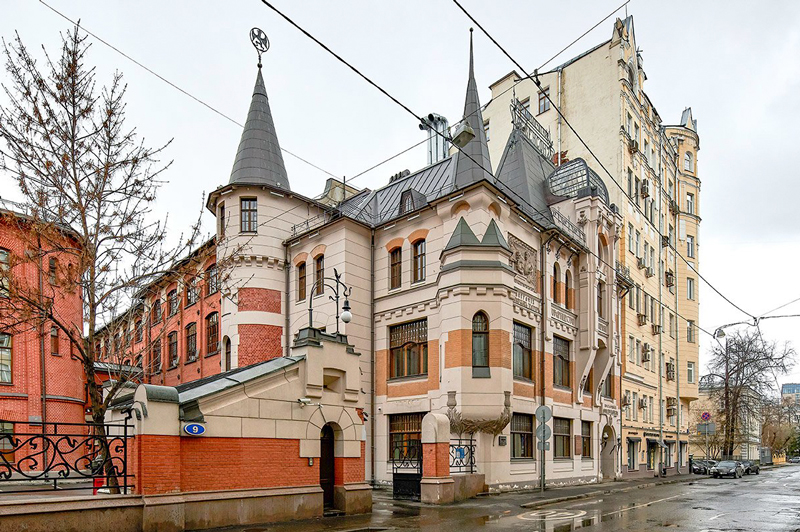
Levenson's printing house was the first in Moscow to be built in the Art Nouveau style, which was at the height of popularity at the time. Two bay windows decorated with decorative hipped roofs highlight the edges of the eastern facade facing the courtyard. The overall design of the building, with its high pinnacle roofs, was inspired by the Romanesque Gothic style popular in late 19th century European architecture.
The main facade, designed in Shechtel's favourite style, combines symmetry and asymmetry.
In 2013-2016, the administrative building of the former printing house was overhauled. During the restoration, the original colour scheme of the building was restored, the stucco and bas-relief on the third floor were restored, and historical inscriptions and lanterns were recreated.
Levenson's printing house was the first in Moscow to be built in the Art Nouveau style, which was at the height of popularity at the time. Two bay windows decorated with decorative hipped roofs highlight the edges of the eastern facade facing the courtyard. The overall design of the building, with its high pinnacle roofs, was inspired by the Romanesque Gothic style popular in late 19th century European architecture.
The main facade, designed in Shechtel's favourite style, combines symmetry and asymmetry.
In 2013-2016, the administrative building of the former printing house was overhauled. During the restoration, the original colour scheme of the building was restored, the stucco and bas-relief on the third floor were restored, and historical inscriptions and lanterns were recreated.



“Utro Rossii” Printing house
Address: Bolshoi Putinkovsky Lane. 5
Address: Bolshoi Putinkovsky Lane. 5
Fourth riddle


At the beginning of the 20th century, an elegant Art Nouveau building was erected in Bolshoy Putinkovsky Lane, designed by the famous architect Shechtel. It was intended for the printing house and editorial office of the newspaper ‘Morning of Russia’ founded by Pavel Ryabushinsky.
The idea of creating the newspaper ‘Morning of Russia’ arose as a desire to support the party of ‘Octobrists’ and the faction of ‘progressives’ in the III State Duma. In this endeavour, Pavel was always supported by his brother Vladimir, who became his right-hand man in the publishing business.
.
.
The idea of creating the newspaper ‘Morning of Russia’ arose as a desire to support the party of ‘Octobrists’ and the faction of ‘progressives’ in the III State Duma. In this endeavour, Pavel was always supported by his brother Vladimir, who became his right-hand man in the publishing business.
.
.
The newspaper ‘Utro Rossii’ expressed the interests of commercial and industrial circles and was published from September to October 1907. After that it was closed by the authorities.
As for the building of the printing house, it is located deep in the neighbourhood, unfolding across the site. The façade facing the driveway is a fine example of the work of the famous architect Fedor Shechtel, created during his mature period, when he strove for brevity and monumentality.
As for the building of the printing house, it is located deep in the neighbourhood, unfolding across the site. The façade facing the driveway is a fine example of the work of the famous architect Fedor Shechtel, created during his mature period, when he strove for brevity and monumentality.
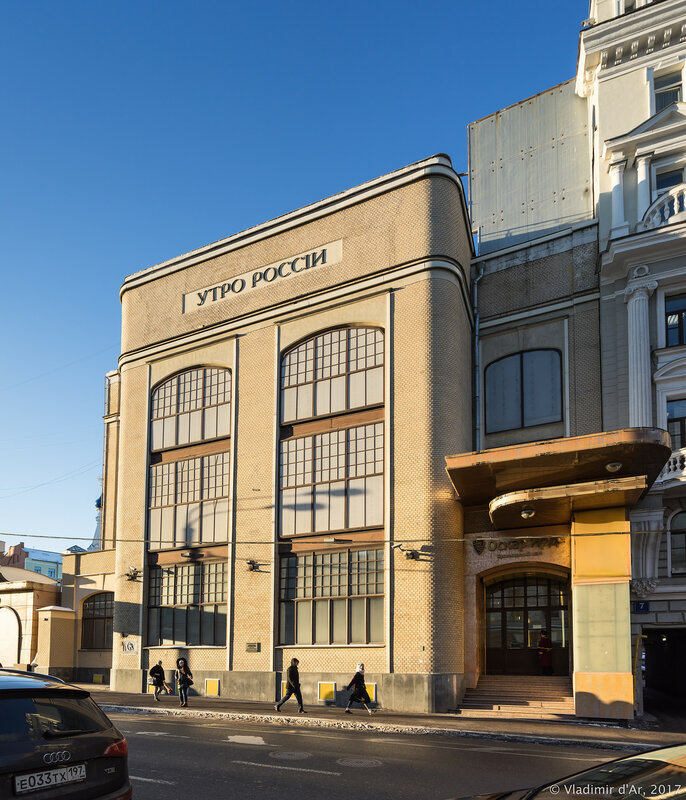
The building is designed as rationally as possible. The façade, symmetrical and fully corresponding to the internal structure, is characterised by strictness and lack of unnecessary details. The central part, facing the street, is highlighted by two huge windows running through three floors. The fine glazing of the windows creates a rhythm on the façade, which is clad in light-coloured ceramic tiles.
In 2000-2001 the building was extensively rebuilt as a cultural and entertainment complex and is one of the most successful examples of reconstruction in Moscow. In the course of the works, the superstructure of the printing building was demolished and the inscription ‘Morning of Russia’ on the attic of the central façade was restored.
In 2000-2001 the building was extensively rebuilt as a cultural and entertainment complex and is one of the most successful examples of reconstruction in Moscow. In the course of the works, the superstructure of the printing building was demolished and the inscription ‘Morning of Russia’ on the attic of the central façade was restored.